Start in a quieter setting where your dog can notice you. Keep early practice short and reward moments when the leash is loose. Build toward more distracting routes gradually.
Start here
Check fit before changing equipment. Look for rubbing, slipping and restricted movement. Equipment should help you manage a walk while you teach the behavior you want.
Keep in mind
If you cannot comfortably manage your dog, get hands-on help with fit and handling. A product recommendation alone cannot assess your dog’s behavior.
Make a walk easier to learn from
Choose a short route with enough room to turn away from distractions. Begin before your dog is already pulling hard. Reward a loose leash and check-ins, then continue moving. If tension builds, pause or change direction calmly and give your dog another opportunity to walk with slack. Practice in small sessions; a crowded route is a difficult place to introduce a new skill.
Separate management from learning
A well-fitted walking setup can help you manage your dog while training progresses. Compare where the leash attaches, how the equipment adjusts and whether it slips when your dog backs up. Inspect clips and stitching regularly. Long lines need a suitable open area and careful handling; avoid letting them tangle around people or other dogs. Seek hands-on help when strength, lunging or handling makes a walk difficult.
A practical example
Your dog walks with a loose leash in the hallway but pulls toward the park entrance. Begin practice before reaching that entrance, at a distance where checking in is still manageable. Use a quieter stretch for a few successful repetitions, then decide whether the busier section is appropriate for that session.
Your next steps
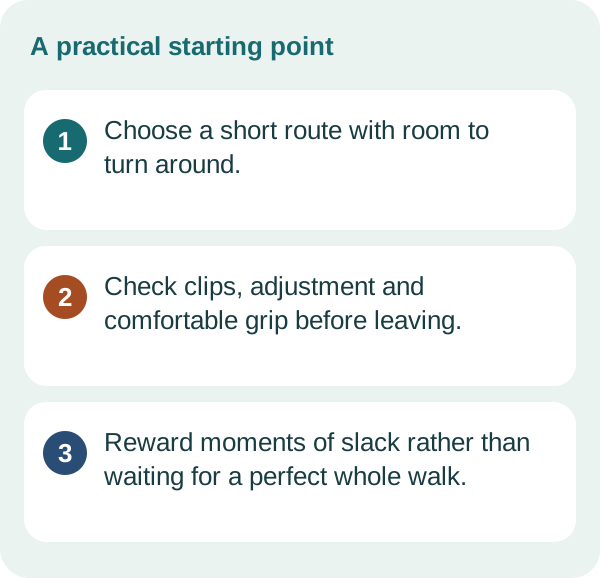
- Choose a short route with room to turn around.
- Check clips, adjustment and comfortable grip before leaving.
- Reward moments of slack rather than waiting for a perfect whole walk.
- Record which distractions made the task harder.
Avoid this shortcut
Avoid testing a new setup for the first time in the hardest location. If physical control is difficult, arrange hands-on help with handling and fit.
Keep reading
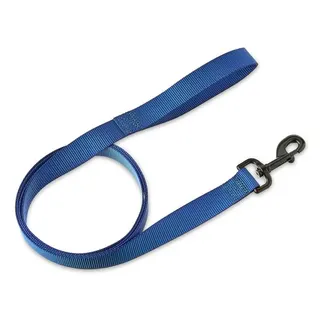 An everyday dog leash should make the ordinary walk easier →
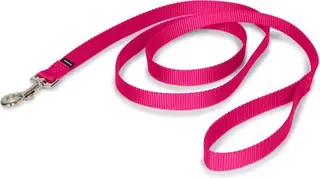 A puppy's first leash: keep the job simple →
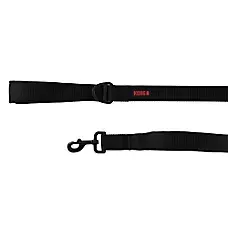 For dogs that pull, choose workable equipment and a training plan →
Put this into practice
Compare equipment guides, build your home-setup plan.
Explore your equipment options ↗