Choose with a little more clarity
The right tool.
For the right job.
Start with equipment types, fit and tradeoffs before comparing individual products.
Crates
A resting space, chosen with care.
Explore ↗Equipment guideGates & pens
Create a boundary that fits your home.
Explore ↗Equipment guideBeds
Make room to stretch out.
Explore ↗Equipment guideWalking equipment
Fit comes before features.
Explore ↗Equipment guideEnrichment
Start simple. Stay involved.
Explore ↗Dog pens
Find your starting point.
 Dog pens · Buying guide
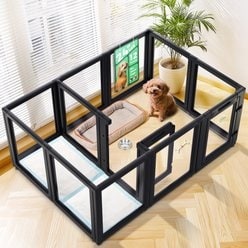
Choosing a dog pen for everyday indoor use
An indoor pen has to work for the whole room. Start with where people walk, where the dog can rest and how the floor will be cleaned. A pen that fits an empty corner may become awkward as soon as its door opens.
Read the guide ↗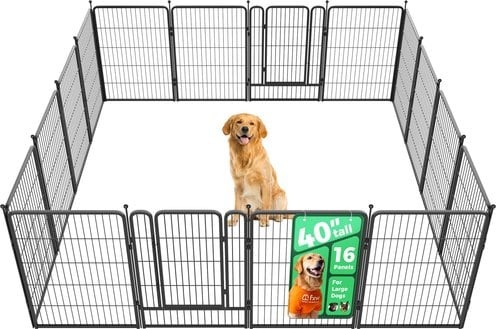 Dog pens · Buying guide
Outdoor dog pens: start with the ground
Outdoor use is a surface-and-location decision before it is a panel-count decision. A pen that works on suitable soil may be unsuitable on a deck, and a tall wall does not establish a secure installation.
Read the guide ↗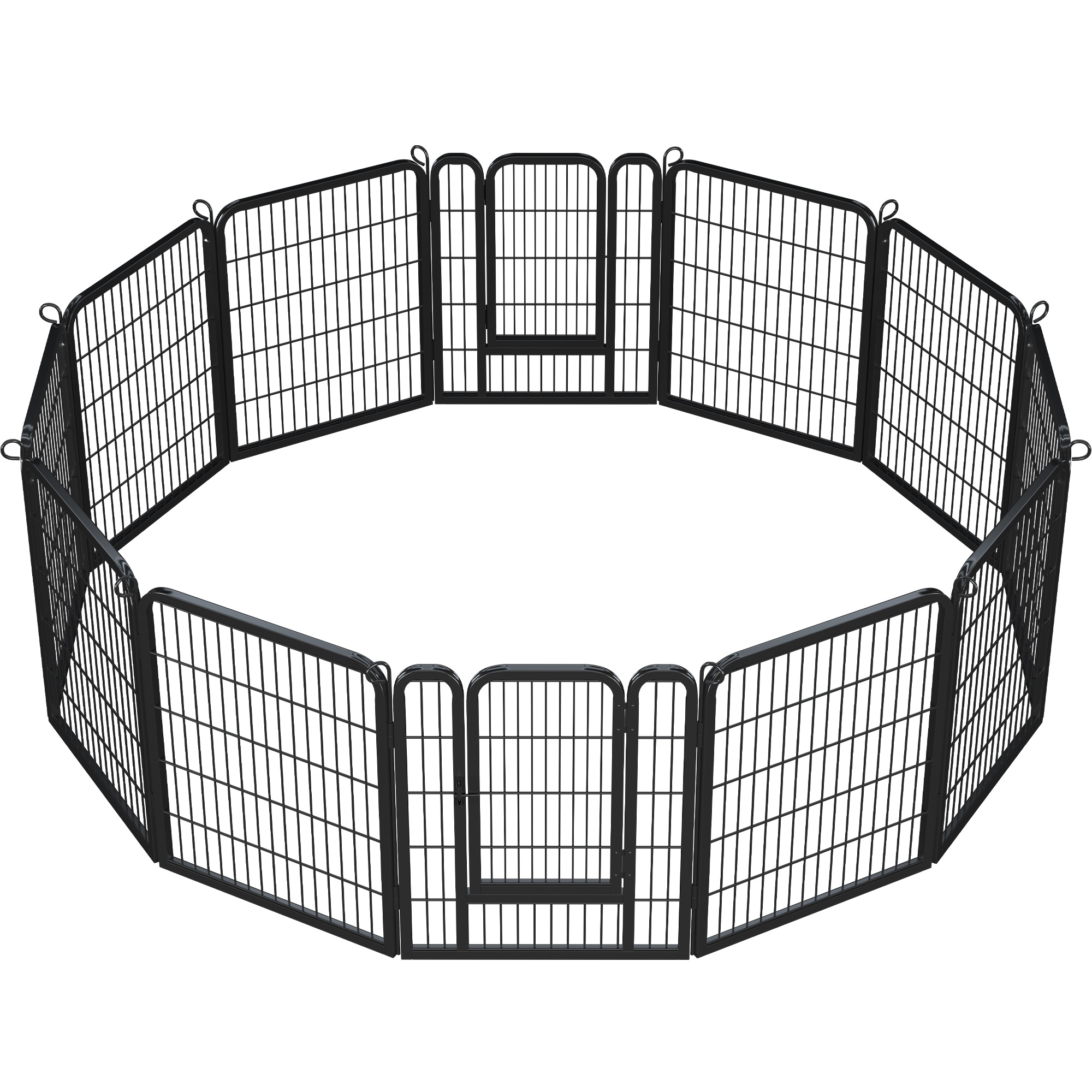 Dog pens · Buying guide
Inside space, outside footprint and panel dimensions
Dog-pen dimensions often describe different things. A panel width, an unfolded fence length and a bounding rectangle can all appear in listings as length or width. None automatically tells you the clear floor space available to the dog.
Read the guide ↗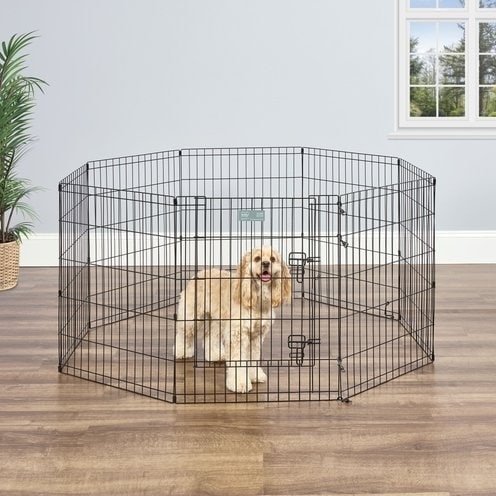 Dog pens · Buying guide
How to choose pen height without a weight shortcut
Weight and breed can start the conversation, but they do not determine a reliable pen height. Dogs of similar weight can have different proportions and very different responses to a barrier.
Read the guide ↗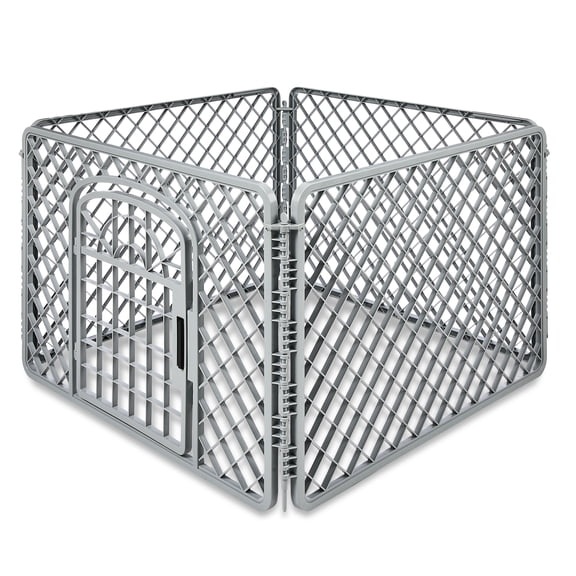 Dog pens · Buying guide
Pens for small dogs and puppies: gaps, access and room
A small body does not automatically make a small pen suitable. Start with openings and usable space, then look at the entry and the way the enclosure meets the floor.
Read the guide ↗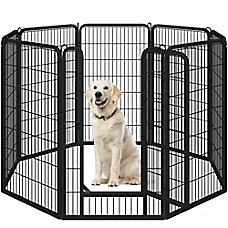 Dog pens · Buying guide
Large-dog pen shopping: usable room and boundary behavior
A large-dog label is not a strength certification. The useful questions concern the individual dog, the assembled interior, the connections and the intended surface.
Read the guide ↗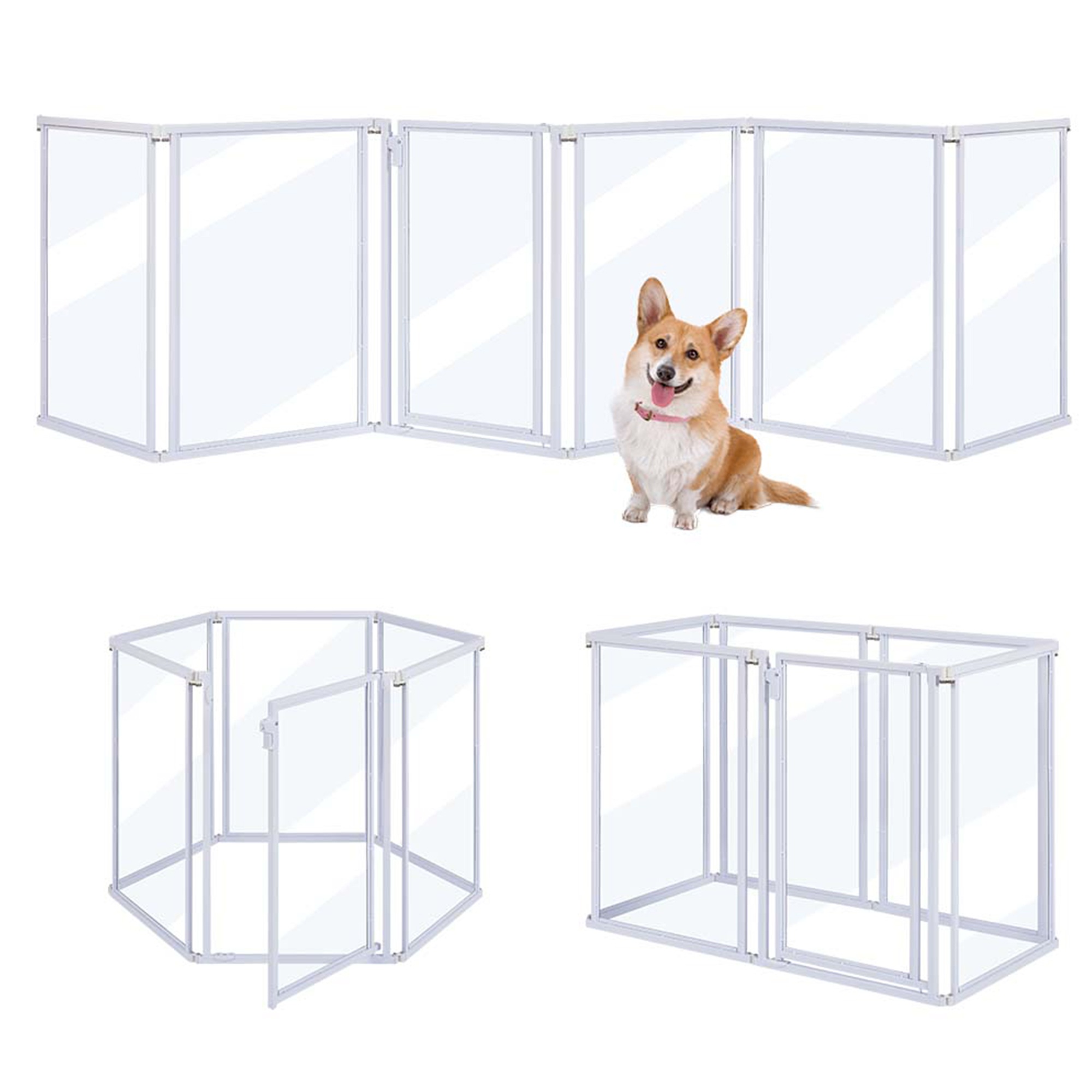 Dog pens · Buying guide
Dog pens for apartments and shared living rooms
In a small home, the pen competes with normal life: chair movement, cupboard doors and the route to the hallway. The best first step is a temporary floor outline, not a product filter.
Read the guide ↗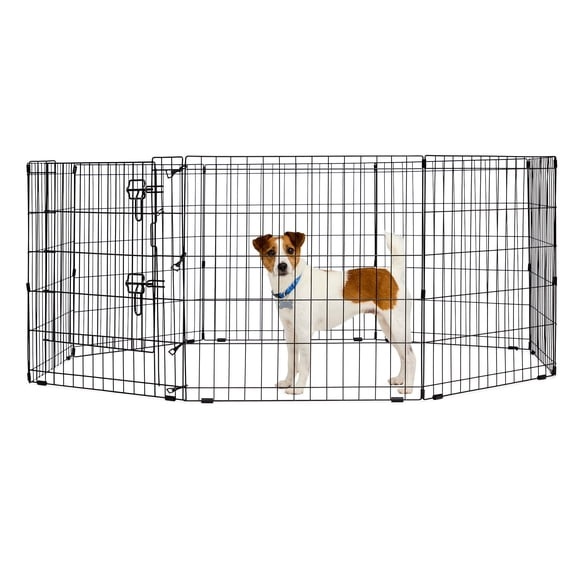 Dog pens · Buying guide
Dog pens on hardwood, tile and other smooth floors
An indoor installation needs a deliberate floor-contact plan. Metal, plastic and clear-panel pens can all have joints or feet that change how the enclosure rests on a smooth surface.
Read the guide ↗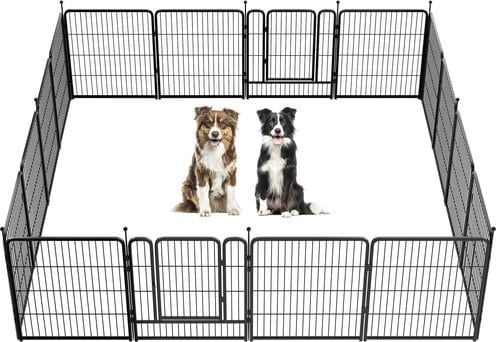 Dog pens · Buying guide
Patios and decks: why stakes are not the answer
A hard outdoor surface changes the pen decision. The ground rods shown in a lawn photo may have nowhere to go on a patio, and a deck can introduce edges and gaps of its own.
Read the guide ↗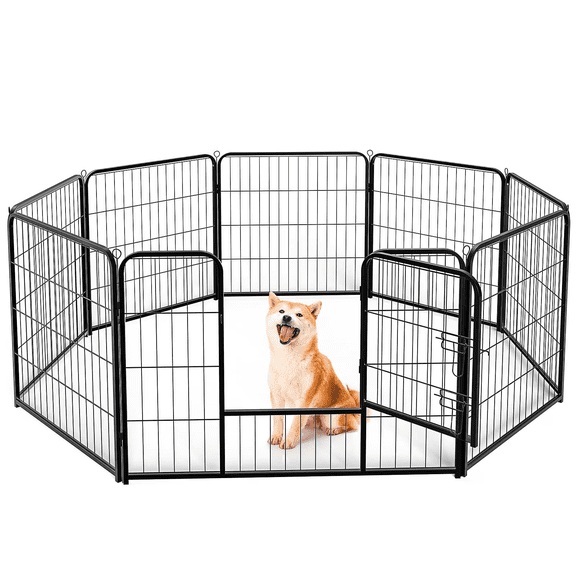 Dog pens · Buying guide
RV and camping pens: packing is part of the product
A camping pen is assembled where conditions change and packed when people are tired. The number of loose rods, the folded length and the site rules can matter as much as the open area.
Read the guide ↗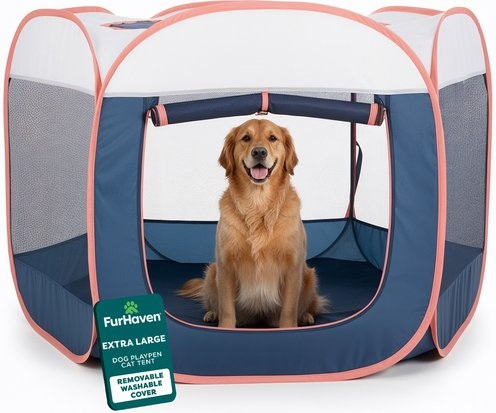 Dog pens · Buying guide
Soft-sided pens: when portability is the right priority
Soft-sided pens make the most sense when compact transport and quick setup solve a real problem. Their material also changes the boundary: mesh, fabric and zippers need a dog that will not persistently damage them.
Read the guide ↗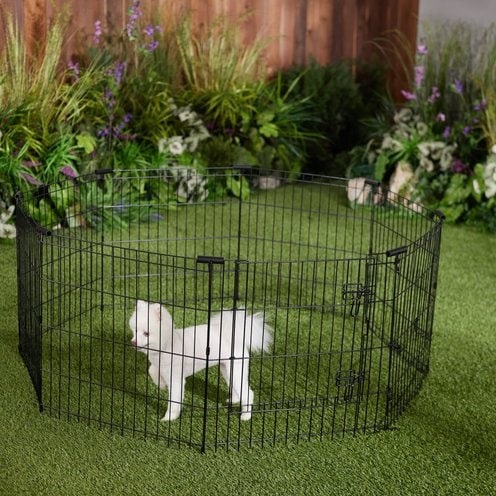 Dog pens · Buying guide
Wire, plastic or clear panels: what changes
Material changes cleaning, visibility and the way a pen packs. It does not, by itself, decide whether a particular dog or room is a good match.
Read the guide ↗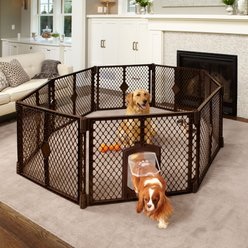 Dog pens · Buying guide
Dog-pen doors: openings, thresholds and daily access
The word door can describe a small pet passage, a human walk-through or a zipped opening. Shopping becomes easier when you identify which access problem you are trying to solve.
Read the guide ↗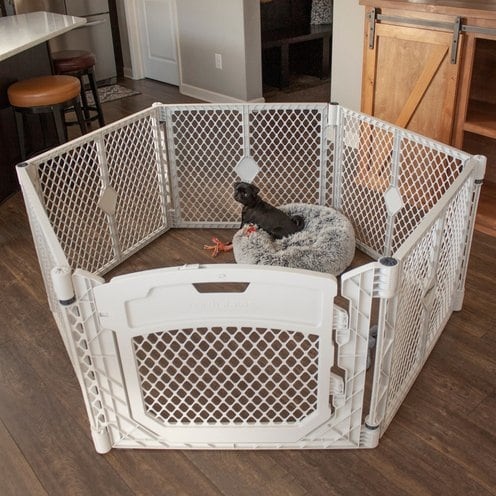 Dog pens · Buying guide
Choosing a pen when stepping over is awkward
If stepping over panels is uncomfortable or unsafe, access should lead the buying decision. A low price or attractive finish cannot compensate for an enclosure that is difficult to enter every day.
Read the guide ↗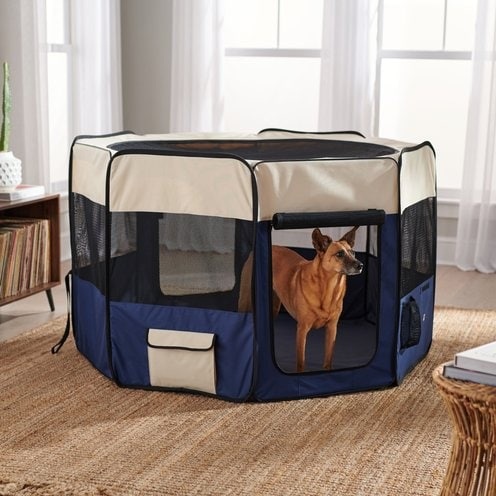 Dog pens · Buying guide
Cleaning a dog pen: buy for the whole routine
Cleaning is part of ownership, so it belongs in the purchase comparison. Look beyond whether a wall can be wiped: joints, floor attachments, feet and storage bags all affect the routine.
Read the guide ↗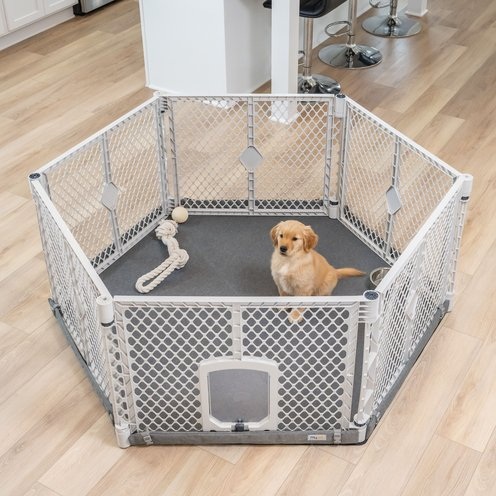 Dog pens · Buying guide
What goes under a dog pen?
The layer under a pen has several possible jobs: protecting the room floor, making spills easier to manage and creating a comfortable surface. One accessory does not automatically solve all three.
Read the guide ↗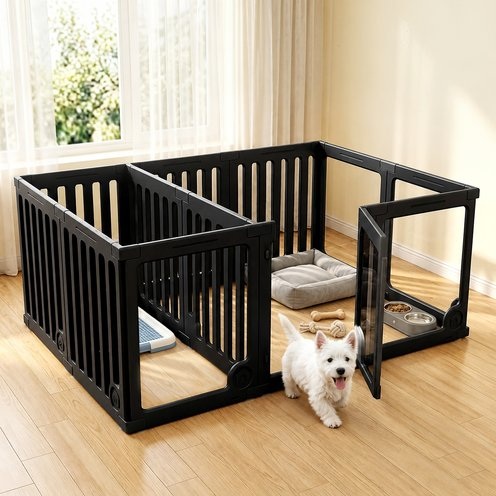 Dog pens · Buying guide
Four, six, eight or sixteen panels?
Panel count describes how many sections arrive, not how much usable floor you get. Width, arrangement and door placement determine what those sections can do.
Read the guide ↗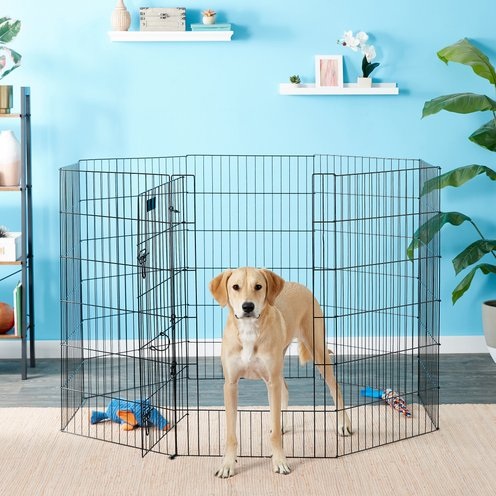 Dog pens · Buying guide
Square, rectangle or octagon: shape changes usable space
A flexible pen can make several outlines from the same pieces. The most useful shape depends on the room and its contents, not just the largest theoretical area.
Read the guide ↗ Dog pens · Buying guide
A pen for visiting friends and family
A visiting setup should be straightforward to carry, protect the host’s room and give the dog a familiar place to rest nearby. The easiest pen to transport is not always the best one for the dog.
Read the guide ↗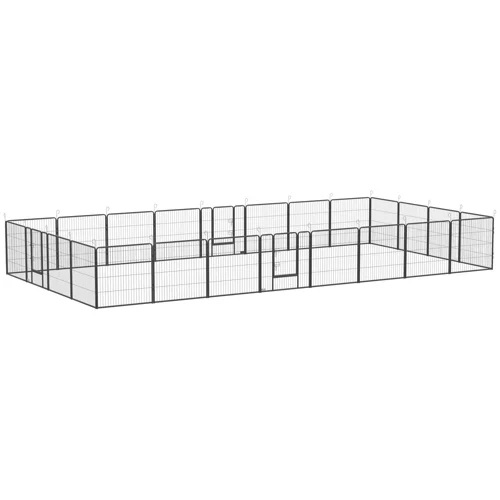 Dog pens · Buying guide
Multiple dogs: more panels do not settle the decision
A listing that mentions multiple dogs does not establish that a shared enclosure is appropriate for the dogs in a particular home. Start with their individual needs and interaction, then decide whether separate spaces are required.
Read the guide ↗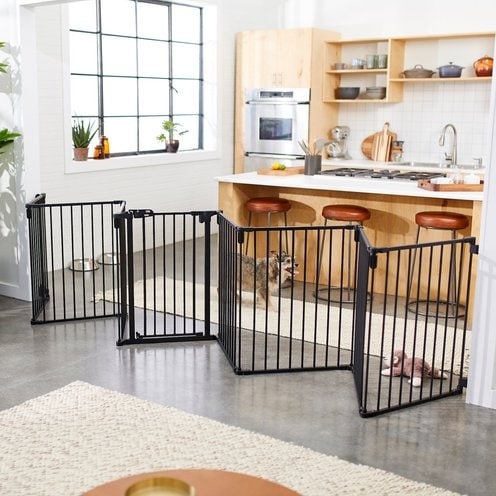 Dog pens · Buying guide
A pen or a kennel: which space are you planning?
A pen creates a bounded floor area, often with an open top and flexible shape. A kennel is a different enclosure format. Begin with the intended everyday use rather than treating the two as interchangeable size labels.
Read the guide ↗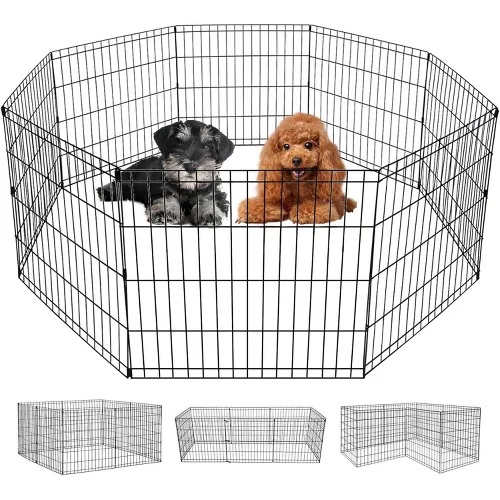 Dog pens · Buying guide
Finding value in dog pens without comparing the wrong sizes
The lowest displayed price is a useful starting point, but it is not a complete value comparison. Many catalog cards combine different heights, panel counts and sellers behind one starting amount.
Read the guide ↗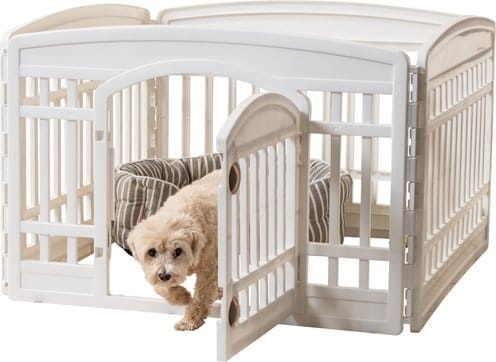 Dog pens · Buying guide
How Pawprint compares pen prices across six stores
Pawprint checked Walmart, Chewy, PetSmart, Petco, Target and Bass Pro Shops. The goal is a traceable comparison, with the source and selected configuration visible beside the amount.
Read the guide ↗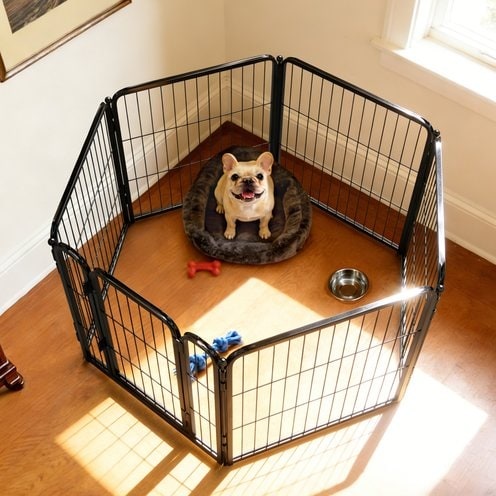 Dog pens · Buying guide
Before ordering a dog pen: a practical final check
The final check should connect the chosen product to the place and dog it is meant for. A few concrete measurements are more useful than another round of broad category browsing.
Read the guide ↗Kennels
Find your starting point.
 Kennels · Buying guide
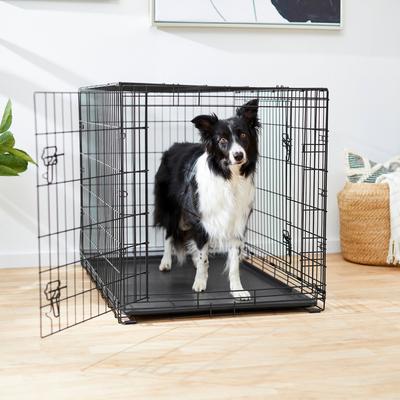
Best kennels for puppies
A puppy kennel earns its place by making everyday care easier: a manageable sleeping area, straightforward cleanup and a door you can reach without rearranging the room. Start with fit and a patient introduction. A long feature list cannot make an oversized or poorly placed crate comfortable.
Read the guide ↗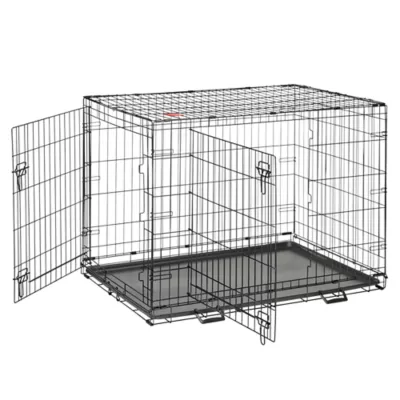 Kennels · Buying guide
Kennels for separation anxiety and what to consider first
There is no kennel that treats separation anxiety. A dog that becomes distressed when left alone needs an appropriate behavior and care plan. VCA warns that some dogs with separation anxiety can injure themselves attempting to escape a crate. A stronger lock does not establish that continued crating is suitable.
Read the guide ↗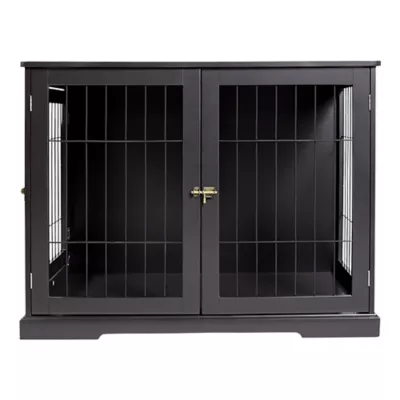 Kennels · Buying guide
Best kennels for your living room
A living-room kennel has two jobs: give the dog a usable resting space and fit a room people share. Furniture-style crates can make that balance easier, but the interior dimensions matter more than the tabletop measurements. Photograph the intended location and measure the dog’s space before comparing finishes.
Read the guide ↗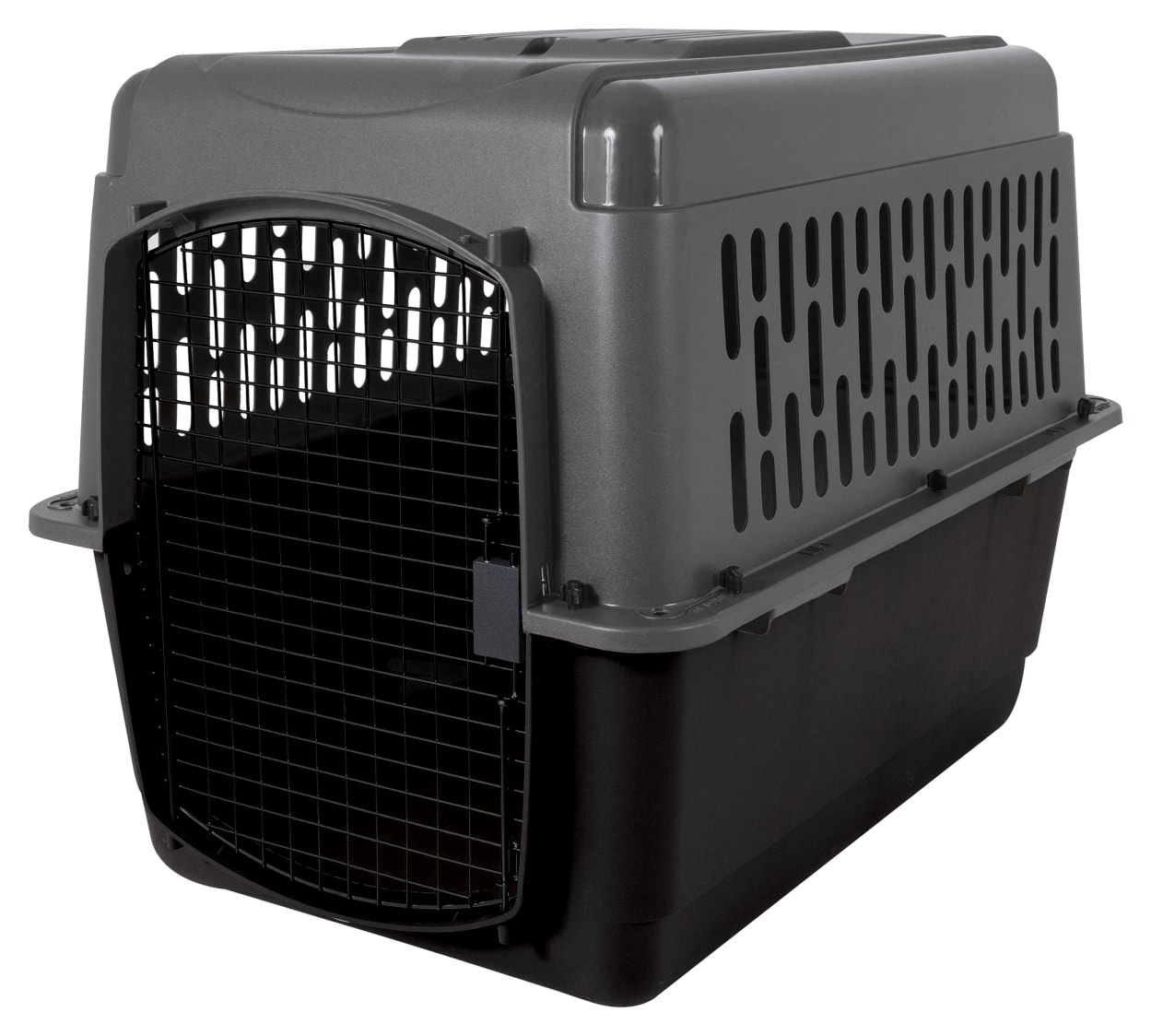 Kennels · Buying guide
Best kennels for your vehicle
A crate that keeps a dog in one place is not automatically a crash-protective system. For vehicle use, compare the exact kennel model, size, installation method and relevant independent evidence before looking at storage pockets or decorative finishes.
Read the guide ↗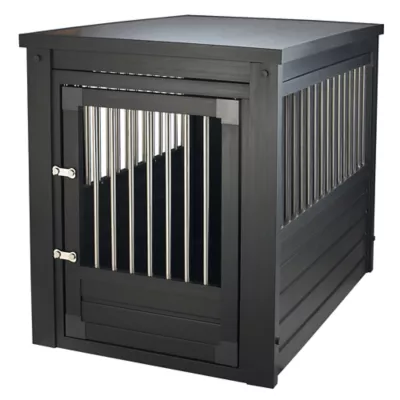 Kennels · Buying guide
Best kennels for apartment living
Apartment shopping starts with a floor plan. Mark the kennel footprint with tape and walk past it carrying the things you use every day. The best location leaves both a comfortable dog area and a route that does not require everyone to step around an open door.
Read the guide ↗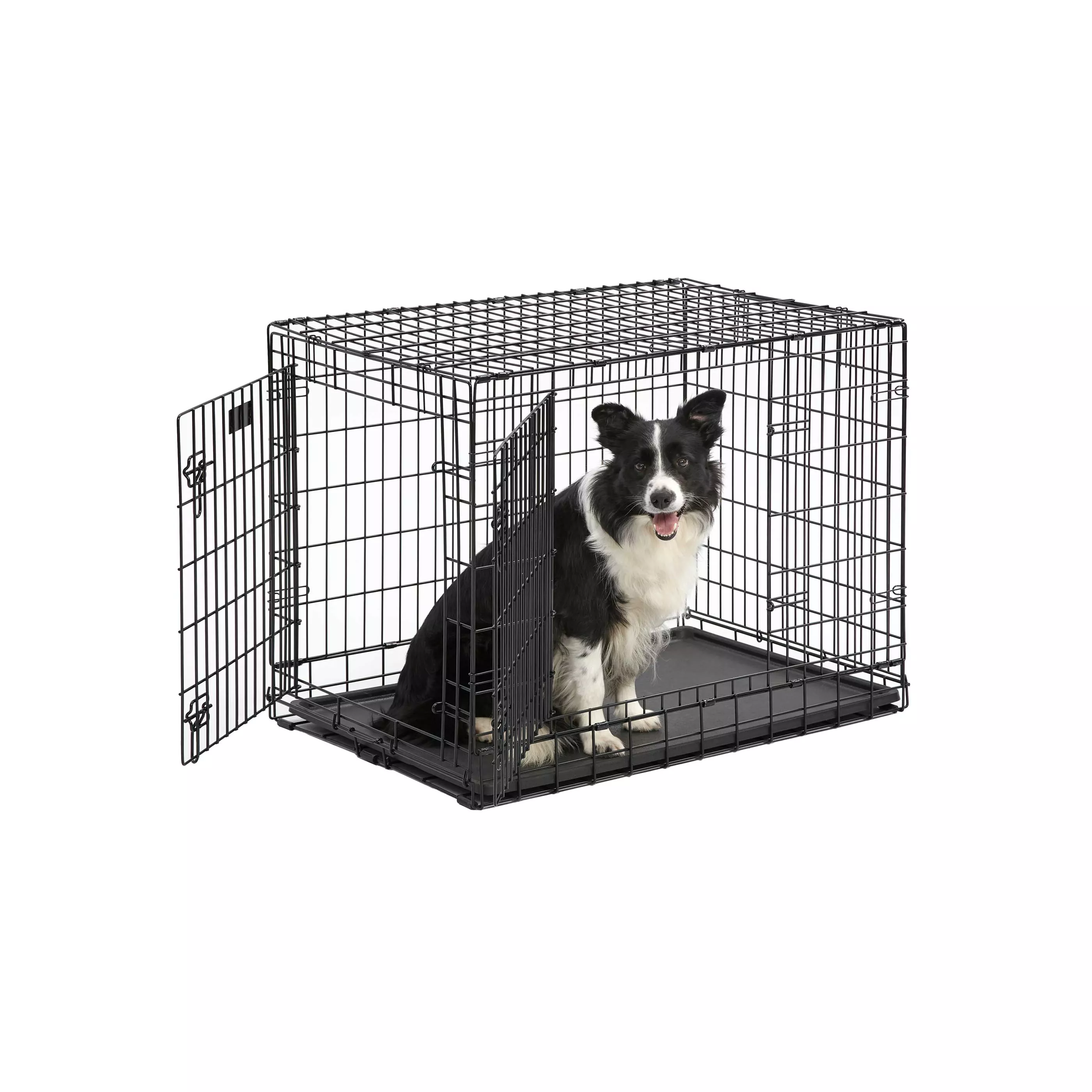 Kennels · Buying guide
Best kennels for large dogs
A large-dog kennel should be chosen with measurements, not a breed photograph. Product labels such as Large and Extra Large are not standardized across the brands in this catalog. Compare the actual usable interior and the dog’s ability to enter and settle naturally.
Read the guide ↗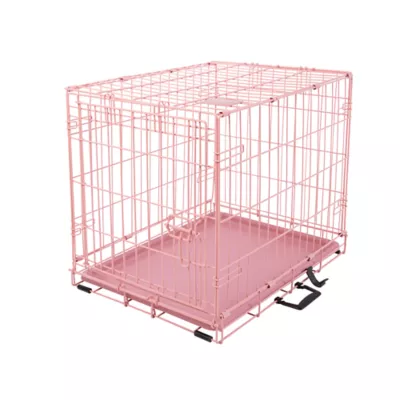 Kennels · Buying guide
Best kennels for small dogs
Small dogs need a kennel that is easy to enter, comfortable inside and compatible with their size. A small exterior footprint is useful, but the spacing of the enclosure and the position of the door matter just as much as the overall length.
Read the guide ↗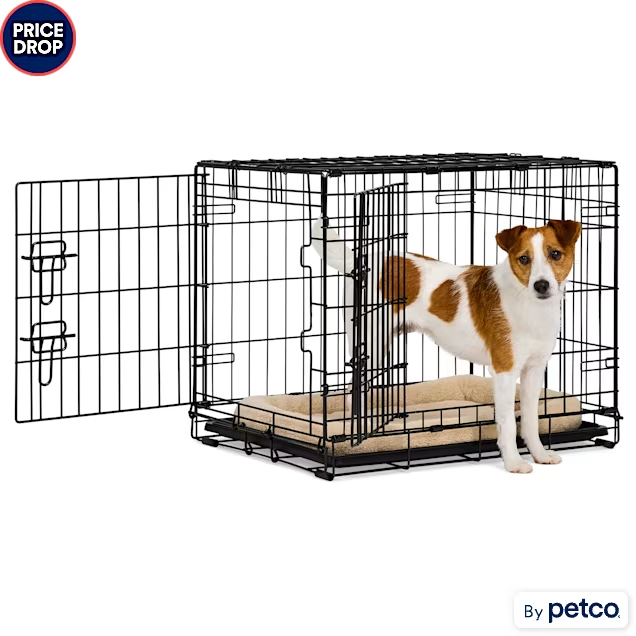 Kennels · Buying guide
Best kennels for crate training
A useful training crate is easy to approach, easy to reward around and easy for you to operate. Hardware is only part of the setup. VCA describes gradual introductions with the door initially open, followed by brief closed-door periods as the dog becomes comfortable.
Read the guide ↗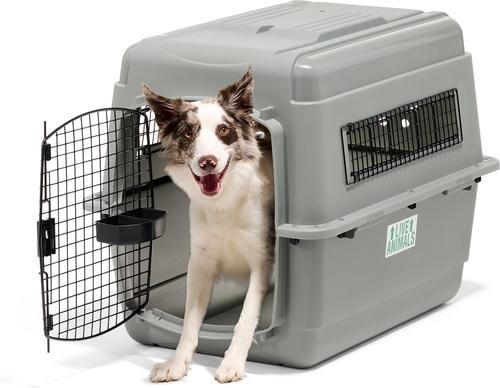 Kennels · Buying guide
Best kennels for easy cleaning
Easy cleaning is more than a smooth-looking exterior. Consider where water, hair and dirt collect, how those areas can be reached and where the dog will stay while you clean. A design with an accessible tray may save more effort than a decorative surface that wipes clean only on the outside.
Read the guide ↗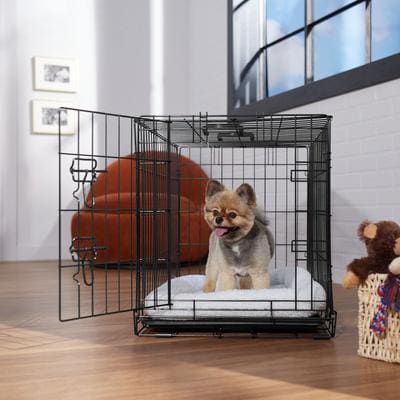 Kennels · Buying guide
Best folding kennels for storage
A folding kennel is a good fit when you will regularly clear the room, store it between visits or take a familiar resting space somewhere else. Compare the folded dimensions and how the package is secured, not only the size of the assembled crate.
Read the guide ↗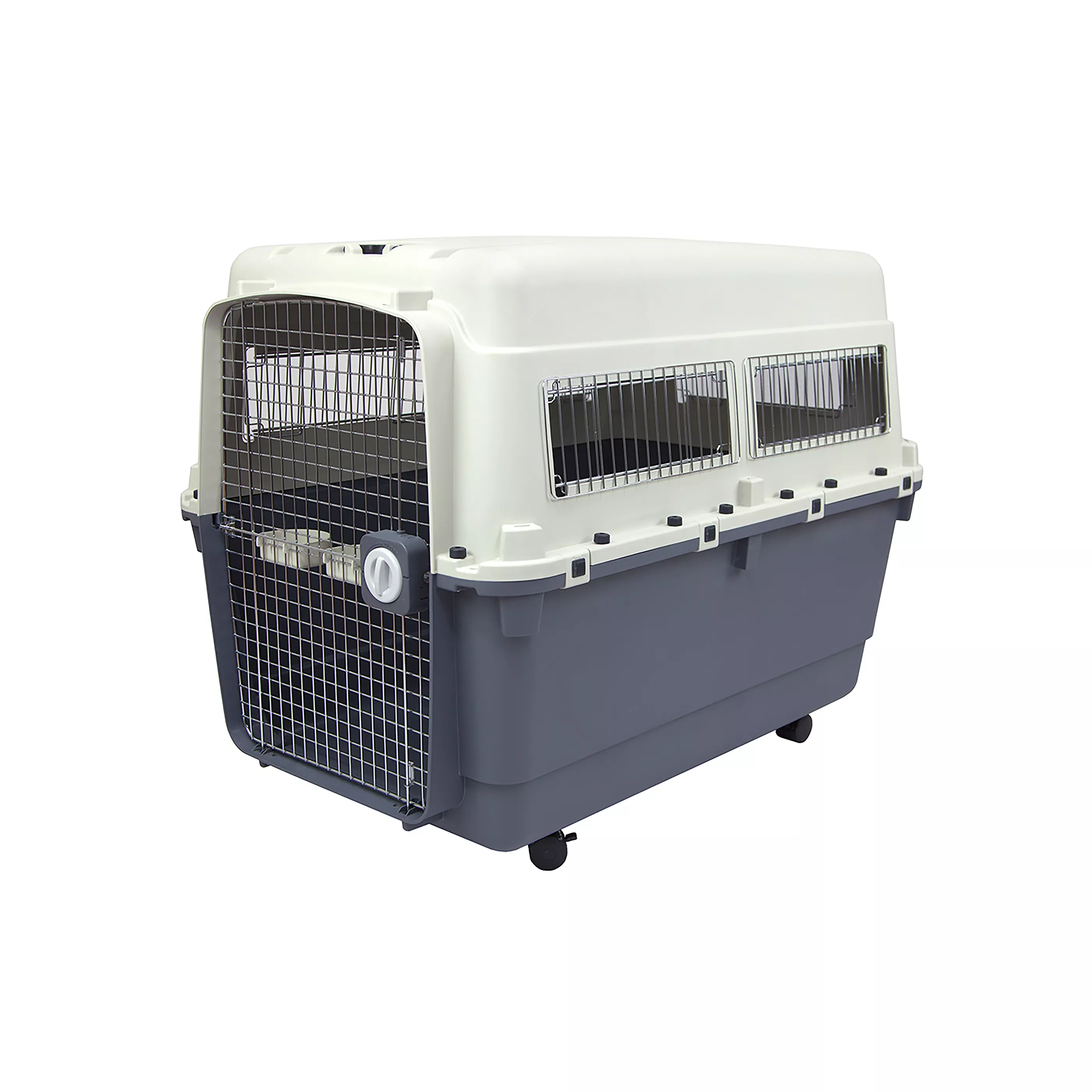 Kennels · Buying guide
Kennels for air travel and what to verify before buying
Air-travel shopping begins with the airline and the planned journey. A product title that says airline approved is not confirmation that your airline will accept that kennel, that size or your dog on that flight. IATA’s traveler guidance is a useful starting point, followed by the carrier’s current requirements.
Read the guide ↗ Kennels · Buying guide
Best kennels for outdoor use
An outdoor kennel is a containment structure, not a complete care plan. Compare the location, weather exposure, supervision and the dog’s needs before deciding on the frame. A covered run and a portable indoor crate are different products even when both are called kennels.
Read the guide ↗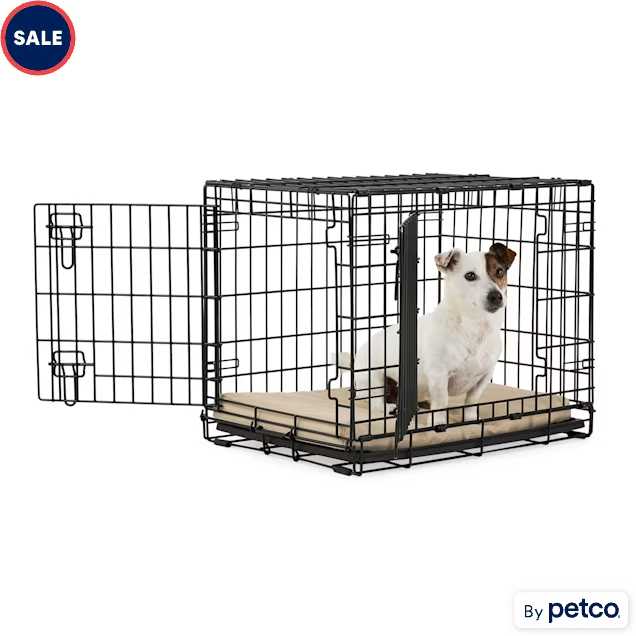 Kennels · Buying guide
Kennels for chewers and escape attempts
Chewing and escape attempts are reasons to reassess the entire confinement setup. Compare materials and connections, but first consider when the behavior occurs. A dog calmly mouthing a surface and a dog panicking when left alone present different purchasing questions.
Read the guide ↗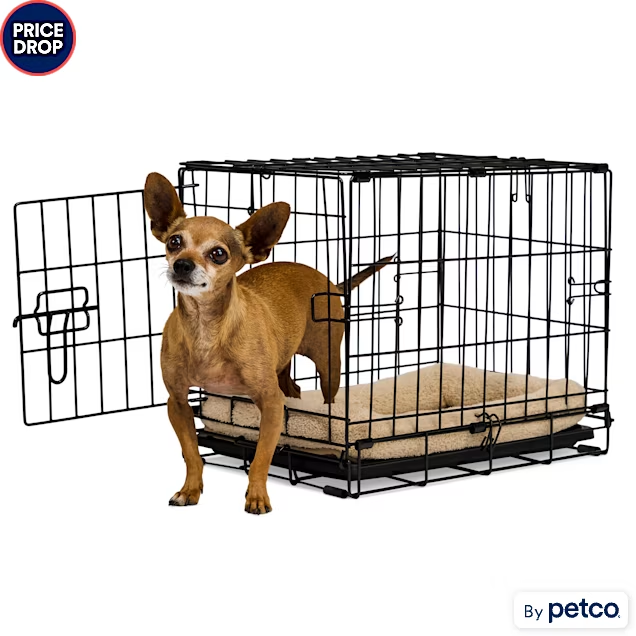 Kennels · Buying guide
Best budget kennels
A budget kennel should meet the same basic fit and usability requirements as a more expensive one. Start with the size and construction your dog needs, then compare prices. A very low family-level price is not a bargain if it applies to a smaller size than the one you will use.
Read the guide ↗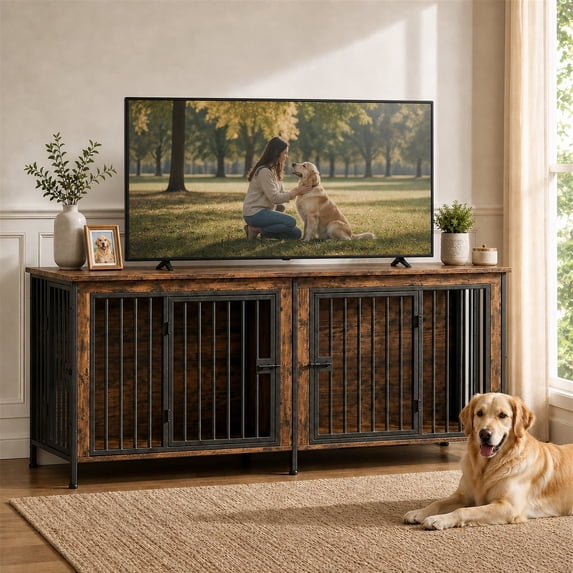 Kennels · Buying guide
Best kennel setups for multiple dogs
Two dogs do not automatically need one double kennel. Begin with each dog’s size, routine and comfort with confinement. Two independent crates can offer more flexibility than one furniture unit, particularly when the dogs need different locations or schedules.
Read the guide ↗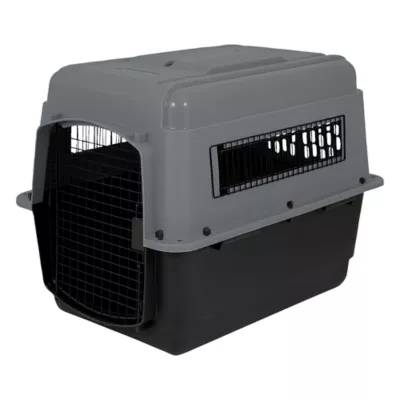 Kennels · Buying guide
Kennels for senior dogs and limited mobility
For an older dog, a convenient kennel is one the dog can use without an awkward approach and one you can reach into comfortably. Start with how the dog moves today. If pain, weakness or a recovery plan affects the choice, discuss the setup with the veterinarian who knows the dog.
Read the guide ↗Dog beds
Find your starting point.
 Dog beds · Buying guide
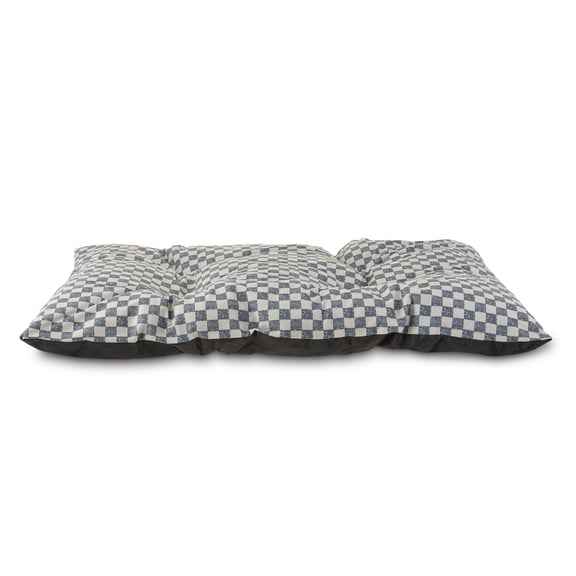
Best dog beds for puppies: start with fit and cleanup
A puppy's first bed should make the daily routine easier. We'd start with a modest, washable shape that fits the current sleeping area, then spend more once the dog's adult size and chewing habits become clearer.
Read the guide ↗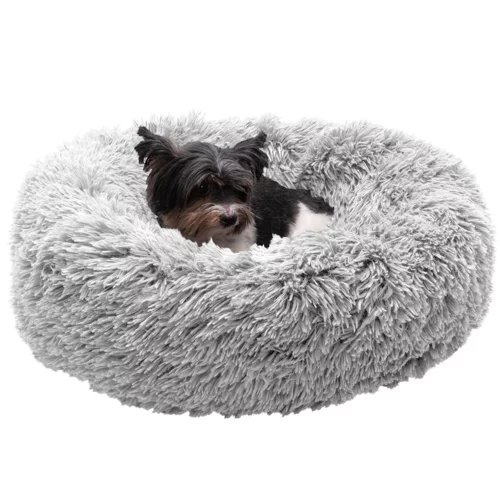 Dog beds · Buying guide
Dog beds for separation anxiety: comfort without cure claims
We would choose a familiar, comfortable sleeping shape for an anxious dog, while treating the anxiety as a separate care problem. A bed advertised as calming has not thereby demonstrated that it treats separation anxiety.
Read the guide ↗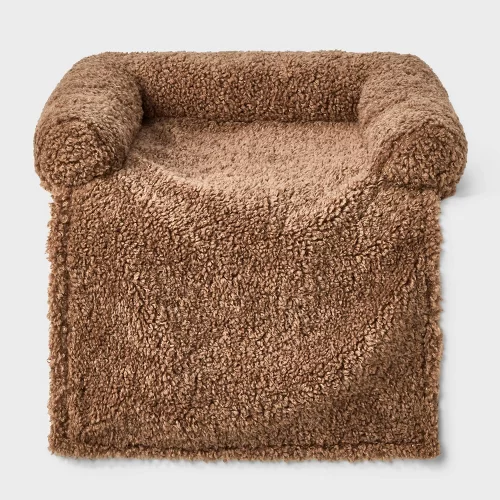 Dog beds · Buying guide
Dog beds that belong in the living room
A living-room bed succeeds when the dog actually uses it and people can still move around it. We'd choose the resting area and care routine first, then match the upholstery or frame to the room.
Read the guide ↗ Dog beds · Buying guide
Dog beds for vehicles: choose comfort around the restraint
We'd plan the restraint or secured carrier first, then choose compatible bedding. A comfortable pad can make the setup more inviting, but it does not turn a loose dog or untested carrier into a crash-protected system.
Read the guide ↗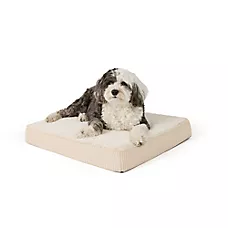 Dog beds · Buying guide
Dog beds for senior dogs: check the entry and the core
For an older dog, we'd start by watching the approach, turn and rise from the current bed. Entry height, traction and room to reposition can matter as much as the orthopedic label.
Read the guide ↗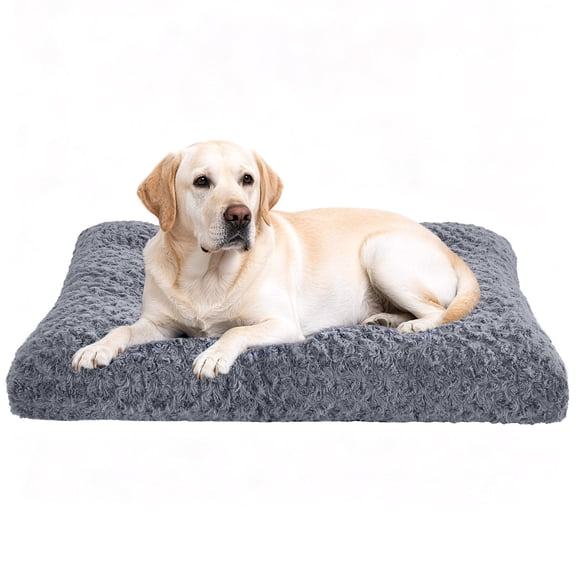 Dog beds · Buying guide
Dog beds for large dogs: measure the sleeping area
We'd shop for a large dog with measurements rather than an XL label. A bed's outside span can include wide bolsters, leaving less space for the dog than a smaller-looking flat mattress.
Read the guide ↗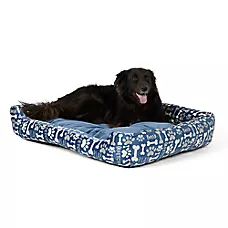 Dog beds · Buying guide
Dog beds for small dogs: make the center count
Small beds can waste a surprising share of their footprint on walls. We'd choose a clear sleeping well and an entrance the dog can use comfortably, then decide how enclosed the bed should feel.
Read the guide ↗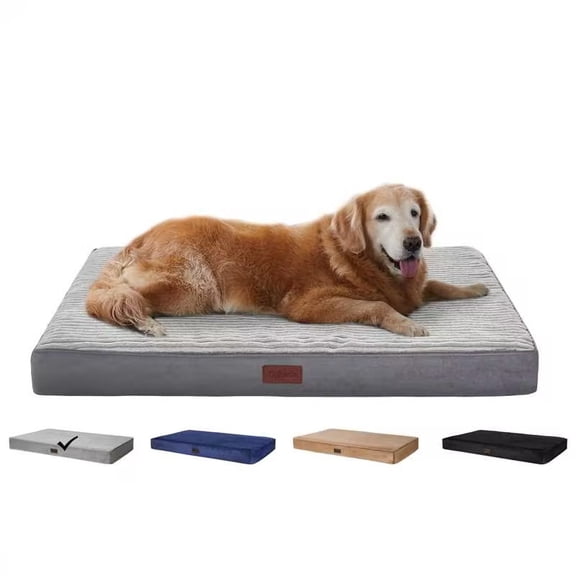 Dog beds · Buying guide
Washable dog beds: read beyond the first sentence
The easiest bed to live with is the one you can clean in your actual laundry setup. We'd check which pieces can be washed, what has to be removed and how long the bed will take to dry.
Read the guide ↗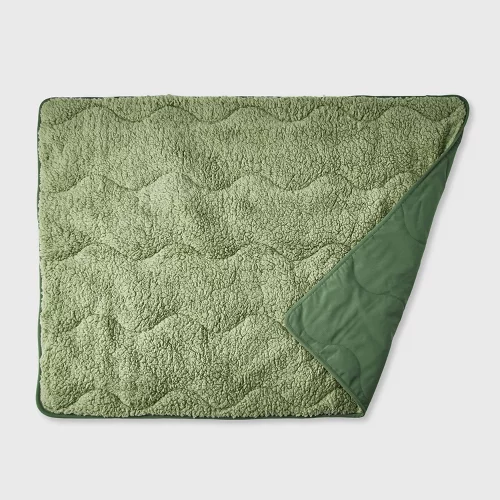 Dog beds · Buying guide
Dog beds for accidents: cover, liner and seams
We'd look for a clear explanation of the liquid barrier before choosing an accident-friendly bed. Waterproof, water-resistant and washable describe different things, and none tells the whole cleaning story alone.
Read the guide ↗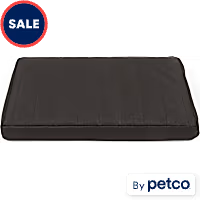 Dog beds · Buying guide
Dog beds for chewers: what durable actually tells you
We'd treat durable bedding as a construction comparison, not a promise that a dog cannot destroy it. Start by distinguishing scratching and nesting from chewing that removes or swallows material.
Read the guide ↗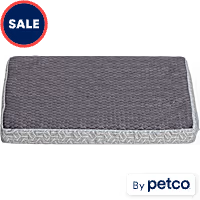 Dog beds · Buying guide
Dog beds for warm sleepers: compare airflow and surface
We'd begin with the dog's existing choice of resting surface. If thick plush beds are ignored in favor of an open floor spot, it is worth comparing a flatter surface or an elevated fabric bed before buying more padding.
Read the guide ↗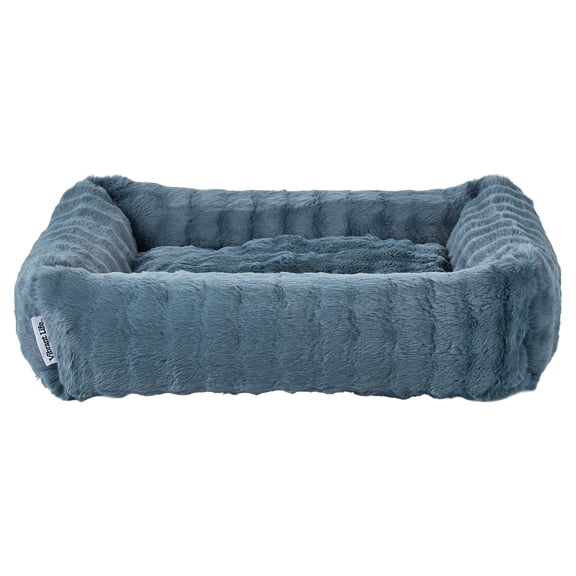 Dog beds · Buying guide
Cozy dog beds for dogs who seek a warmer nest
For a dog who deliberately burrows or chooses plush sleeping spots, we'd compare the enclosure and fabric before choosing the thickest-looking bed. The dog should also have room to leave the nest and choose another spot.
Read the guide ↗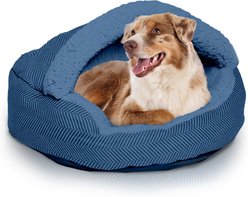 Dog beds · Buying guide
Dog beds for patios and camping stops
An outdoor bed needs to fit the trip as well as the dog. We'd choose around the ground surface, storage space and cleanup routine, then check what exposure the product instructions actually allow.
Read the guide ↗ Dog beds · Buying guide
Dog crate mats and pads that fit the floor
The best crate pad starts with the actual tray measurements. We'd rather have a properly fitting, manageable layer than a larger cushion that curls up against the door or crowds the sleeping space.
Read the guide ↗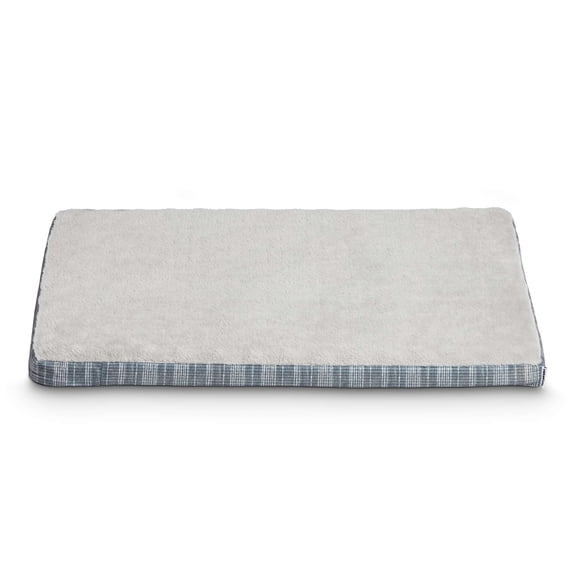 Dog beds · Buying guide
Budget dog beds: save on the right size
We'd define a budget around the size and construction the dog needs, then compare the actual selected options. A family-level starting price can make a smaller bed appear cheaper than a correctly sized alternative.
Read the guide ↗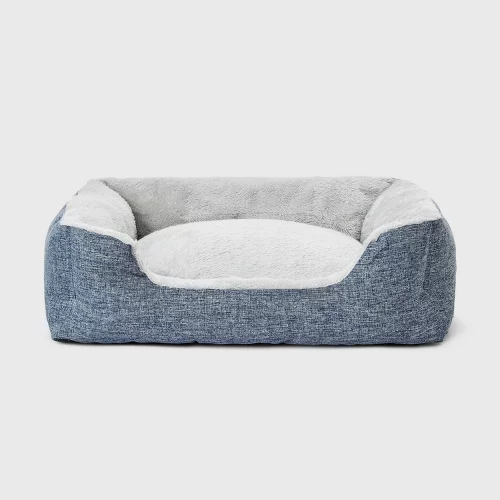 Dog beds · Buying guide
Curlers, leaners and sprawlers: choose the bed shape
We'd choose shape by watching the dog sleep when no one is asking it to pose on a bed. A dog who curls tightly, leans on a sofa arm or stretches every leg is giving a more useful clue than a product's breed-size label.
Read the guide ↗Harnesses
Find your starting point.
 Harnesses · Buying guide
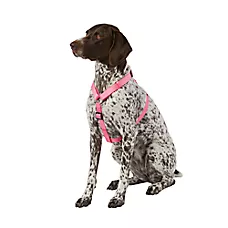
The best puppy harness starts with today's measurements
Our first puppy-harness purchase would be the simplest model that fits securely today. Buying an oversized adult harness to save a later purchase is poor value if a puppy can slip out of it now.
Read the guide ↗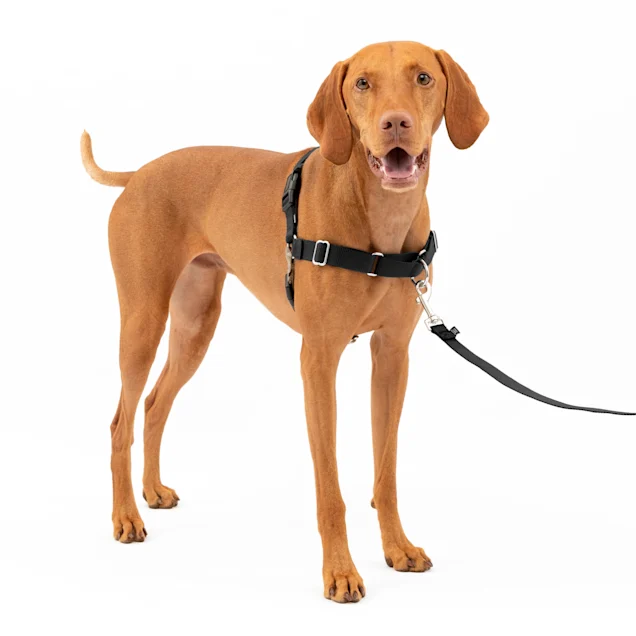 Harnesses · Buying guide
Buying a harness for a dog that pulls: control without a miracle claim
We would treat a no-pull harness as walking equipment that can help the handler, alongside a training plan. The phrase on the box does not tell us how the dog will move in that particular design.
Read the guide ↗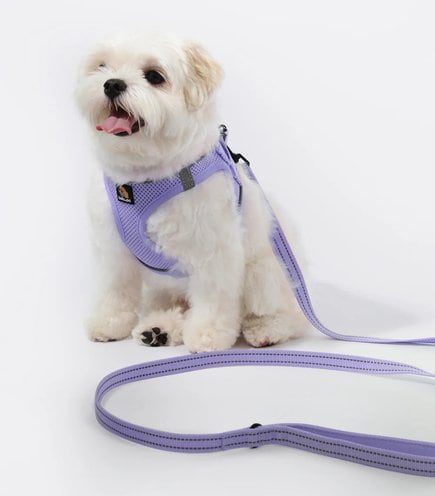 Harnesses · Buying guide
Small-dog harnesses: less bulk, better measurements
For a small dog, the amount of hardware and fabric matters almost as much as the nominal size. We would start with the chest and neck chart, then compare how much harness the dog actually has to carry.
Read the guide ↗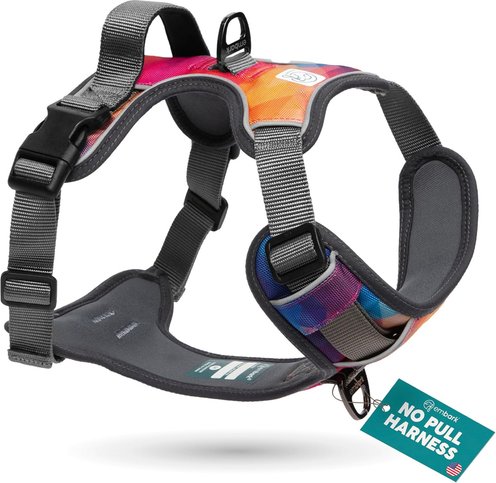 Harnesses · Buying guide
Large-dog harnesses: start with fit, then choose the handling features
A large-dog title is not enough information to buy a harness. We would check the full adjustment range, leash attachment and fastening instructions before choosing a larger or heavier-looking vest.
Read the guide ↗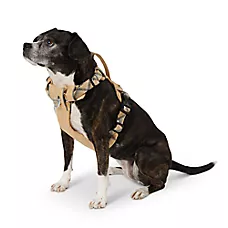 Harnesses · Buying guide
A hiking harness should earn its place on the trail
Our hiking shortlist favors a secure walking fit, useful adjustments and a realistic cleaning routine. Pockets, handles and modular attachment areas only add value when the outing actually calls for them.
Read the guide ↗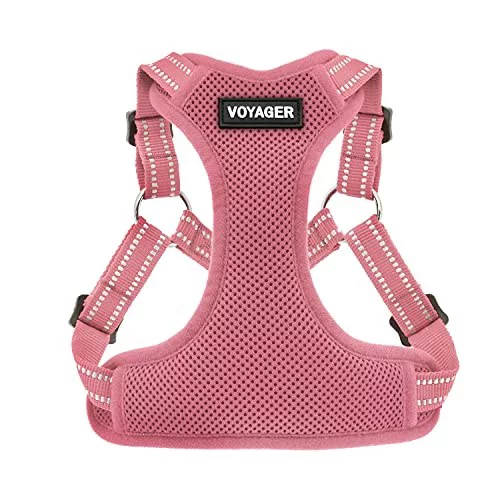 Harnesses · Buying guide
When a dog backs out: buy for a verified fit, not an escape-proof promise
We would take backing-out risk seriously without promising that any harness makes escape impossible. The useful purchase is a design that can be fitted to this dog's shape and checked in a secure setting.
Read the guide ↗ Harnesses · Buying guide
Harness shopping for nervous dogs: make getting ready easier
For a nervous dog, we would choose a fitting routine the dog can learn comfortably. A harness can change how a walk begins, but it is not treatment for separation anxiety or a way to leave a distressed dog restrained at home.
Read the guide ↗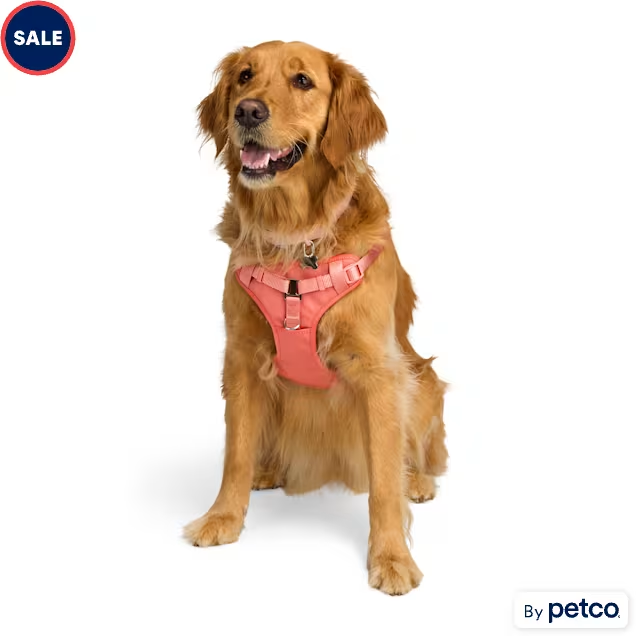 Harnesses · Buying guide
Step-in harnesses: compare the dressing routine before the price
Step-in is a useful description of how the harness goes on, not a guarantee of a secure fit or no-pull behavior. We would buy it when the owner and dog both prefer that routine.
Read the guide ↗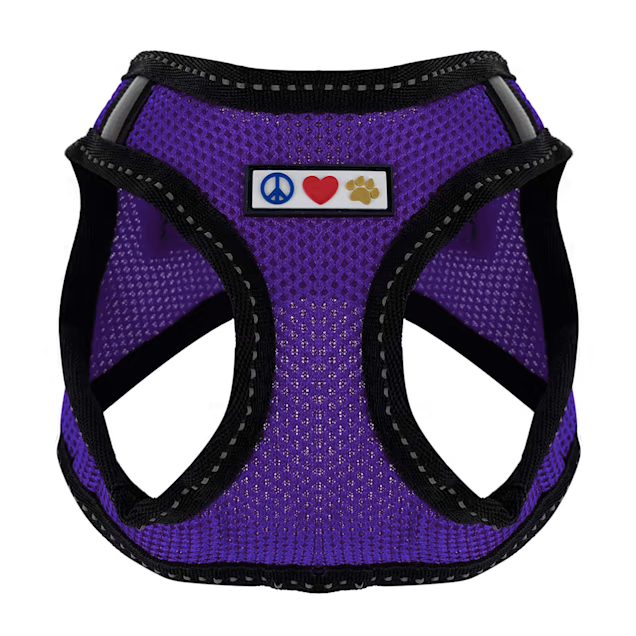 Harnesses · Buying guide
Reflective harnesses for evening walks: check where the light lands
We would treat reflective material as one useful feature in a visible walking setup. A reflective title does not tell us how much material is present, where it faces or how it looks under real conditions.
Read the guide ↗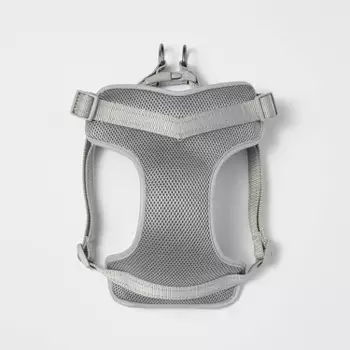 Harnesses · Buying guide
Warm-weather harnesses: reduce bulk without buying a cooling promise
For warm-weather walks, we would compare how much fabric covers the dog and whether the harness still fits properly. Mesh may be a useful construction choice; it does not make hot conditions safe.
Read the guide ↗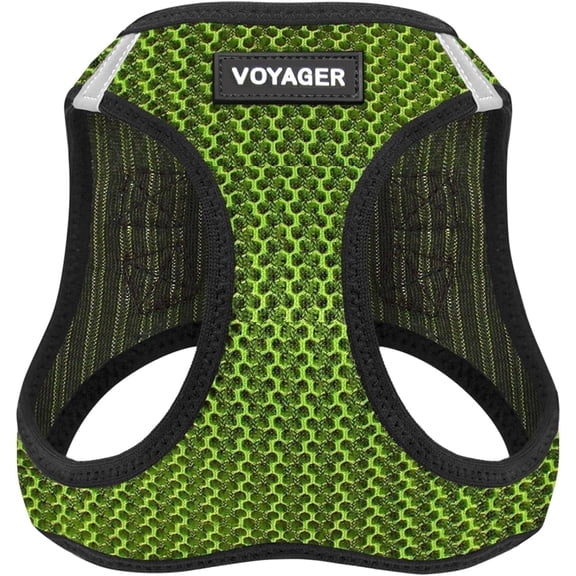 Harnesses · Buying guide
Muddy walks: buy a harness you can clean and dry
Our wet-weather purchase would start with the care label and a practical drying plan. Waterproof, water-resistant and quick-drying are different claims, and this research has not tested any of them.
Read the guide ↗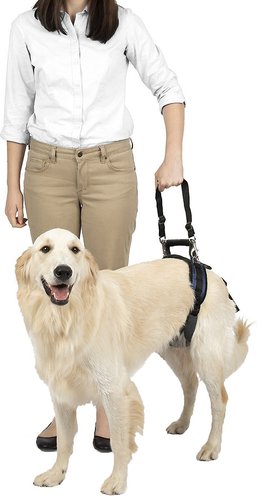 Harnesses · Buying guide
Mobility support harnesses: decide where help is needed first
A support harness is a different purchase from a walking vest with a handle. We would begin with the dog's assistance needs and the handler's ability, then compare the location of support.
Read the guide ↗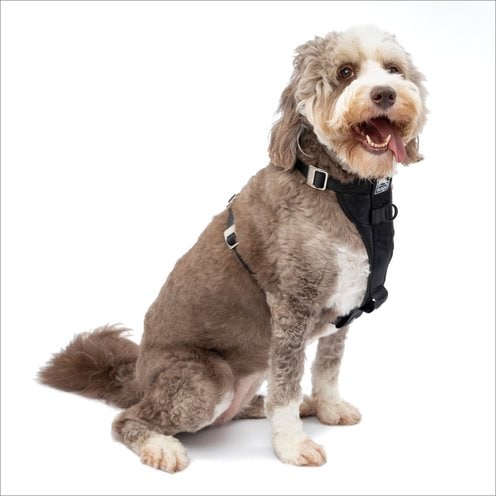 Harnesses · Buying guide
Car harness shopping: separate walking gear from crash evidence
The car-oriented Enhanced Strength Tru-Fit is the only starting model we feature here for a closer vehicle-use investigation. This is not a declaration that it is the safest harness or a claim of current independent certification.
Read the guide ↗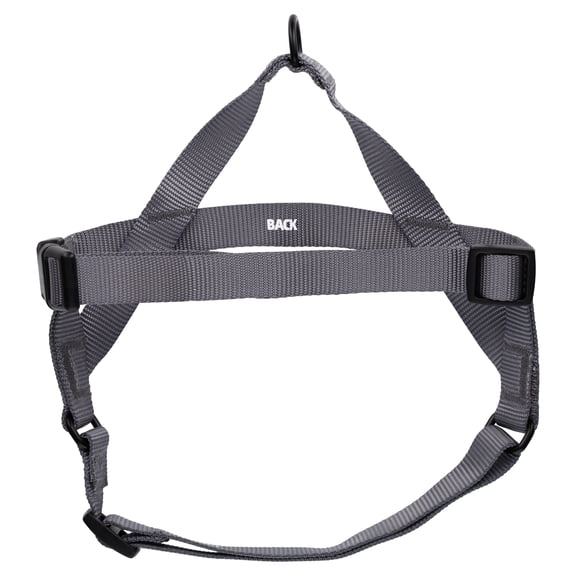 Harnesses · Buying guide
Budget harnesses: compare the usable fit, not the sale badge
The lowest useful price belongs to a harness that fits the dog and serves the walk. We would use the dated prices as a starting point, then compare the same size and included pieces before deciding what is inexpensive.
Read the guide ↗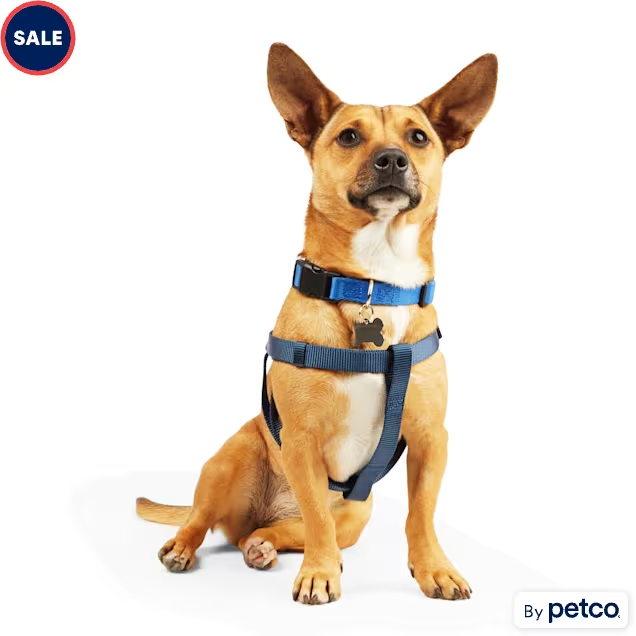 Harnesses · Buying guide
Everyday dog harnesses: choose the routine you can repeat
For neighborhood walks, we would choose a harness that is easy to fit correctly, comfortable during movement and simple to inspect. There is little benefit in buying an elaborate vest whose added features never leave the front door.
Read the guide ↗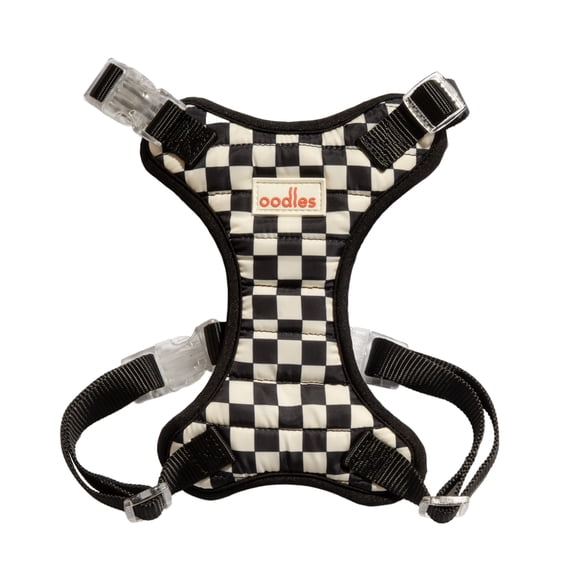 Harnesses · Buying guide
Style-first harnesses: make the fit the non-negotiable part
A pattern, knit finish or seasonal costume can be a perfectly reasonable reason to shop. We would keep the practical fit requirements intact and treat decorations as an additional feature to inspect.
Read the guide ↗Leashes
Find your starting point.
 Leashes · Buying guide
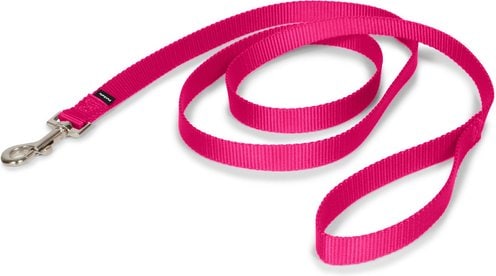
A puppy's first leash: keep the job simple
For a first puppy leash, we would start with a conventional fixed lead, a manageable clip and a length suited to supervised practice. An extending mechanism or a complicated multi-use system can wait until there is a clear reason to buy one.
Read the guide ↗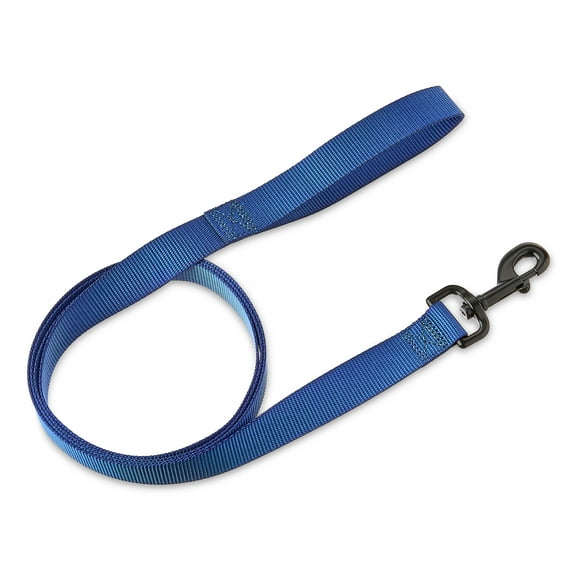 Leashes · Buying guide
An everyday dog leash should make the ordinary walk easier
The most useful everyday lead is often a conventional one that the owner can hold comfortably and inspect easily. We would buy for the normal route before paying for features that only sound useful in a product title.
Read the guide ↗ Leashes · Buying guide
City walks: buy for the moments when space gets tight
On a busy route, we would prioritize a manageable fixed connection and an easy way to shorten the working distance. Extra reach is less useful than handling that works at crossings, entrances and narrow paths.
Read the guide ↗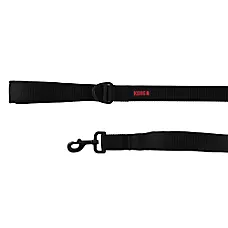 Leashes · Buying guide
For dogs that pull, choose workable equipment and a training plan
We would not buy a lead on the promise that it stops pulling by itself. The useful comparison is whether the lead and attachment arrangement are appropriate, comfortable to handle and practical alongside reward-based walking practice.
Read the guide ↗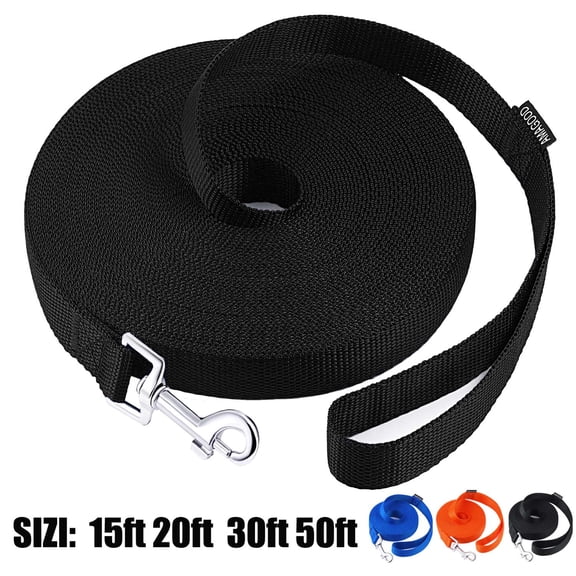 Leashes · Buying guide
Long lines for recall: choose a distance you can manage
A long line can add supervised room to practice while the dog remains connected. We would start with the actual training space and the handler's line-management skills before choosing between fifteen, thirty or many more feet.
Read the guide ↗ Leashes · Buying guide
Hands-free leashes: compare the full configuration
We would buy a hands-free lead when its body-worn configuration serves a real walking preference. It still needs attention and accessible handling; the attachment moves some of the walking forces from the hand to the body.
Read the guide ↗ Leashes · Buying guide
Running with a dog: make the lead part of a considered setup
A running-oriented lead deserves a separate purchase decision from ordinary walking gear. We would first establish that the activity suits the dog and handler, then compare a stable, understandable connection and manageable working length.
Read the guide ↗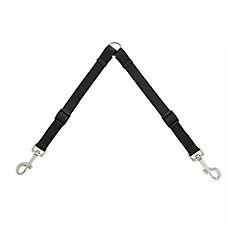 Leashes · Buying guide
Two dogs, one connection: when a coupler is worth considering
We would consider a shared connection when both dogs already walk comfortably together and the owner wants less separate line to manage. Linking two dogs is not automatically easier when their pace, size or reactions differ.
Read the guide ↗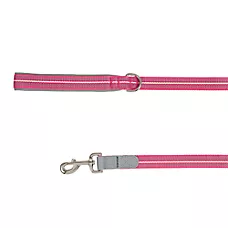 Leashes · Buying guide
Evening-walk leashes: reflective trim or a rechargeable light?
We would distinguish reflective material from a light source before shopping. The useful extra feature depends on the route and setup, and neither description establishes a measured visibility distance in this package.
Read the guide ↗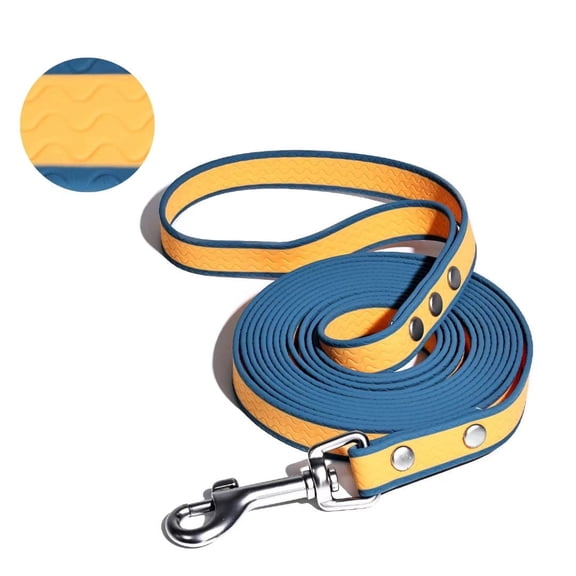 Leashes · Buying guide
Muddy walks: choose a lead you can clean properly
When cleanup is the main reason to shop, we would compare documented materials and care directions. Coated leads can be worth investigating, but BioThane, PVC and TPU are not one interchangeable product identity.
Read the guide ↗ Leashes · Buying guide
Small-dog leads: check the clip as carefully as the length
A small-dog lead should be manageable for the person while using appropriately sized hardware for the dog. We would inspect width and clip weight rather than assume the shortest lead or an XS label settles the choice.
Read the guide ↗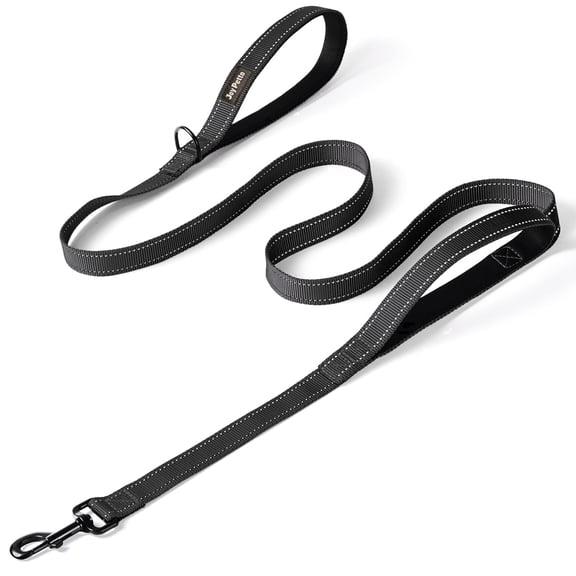 Leashes · Buying guide
Large-dog leads: buy a specification, not a heavy-duty slogan
For a large dog, we would prioritize suitable stated limits, sound hardware and a lead the handler can manage. A thick appearance or Heavy Duty heading is not an independent test result.
Read the guide ↗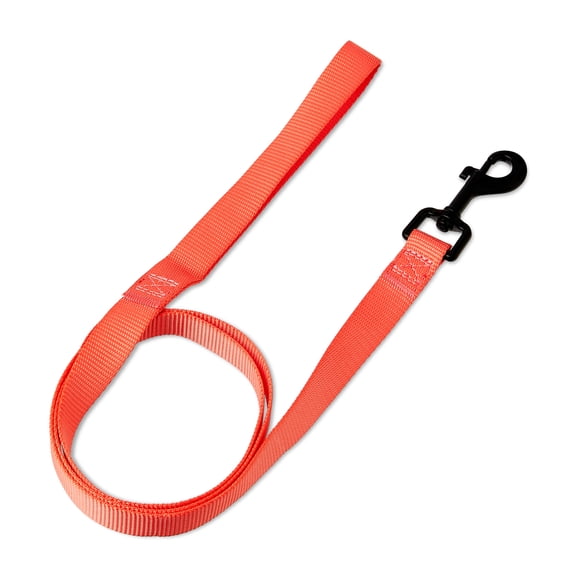 Leashes · Buying guide
Budget dog leashes: compare the whole purchase
The lowest useful price belongs to a suitable selected lead, not necessarily the smallest entry variant or the largest sale badge. We would compare a simple fixed-lead baseline before buying extra mechanisms or accessories.
Read the guide ↗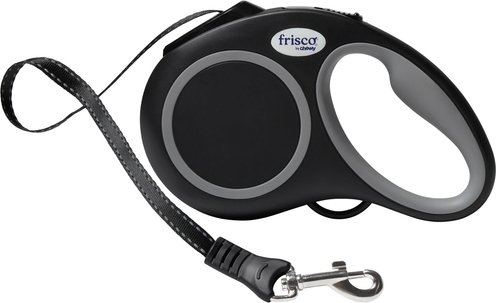 Leashes · Buying guide
Retractable leads: choose the right setting before the model
We would decide whether an extending lead suits the dog, handler and surroundings before comparing brands. The mechanism creates a different handling task from a fixed lead; extra reach is not an automatic upgrade.
Read the guide ↗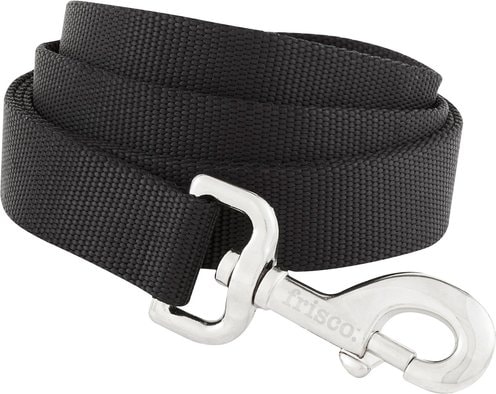 Leashes · Buying guide
Rope, nylon or leather: choose the material for your routine
We would choose material for grip, upkeep and the intended walk rather than rank one surface above all others. A rope, webbing lead and leather lead can have similar lengths while feeling and cleaning differently.
Read the guide ↗ Leashes · Buying guide
When a dog chews the lead: inspect the gear and address the habit
We would treat leash chewing as both an equipment-inspection issue and something to address in the dog's routine. Moving to metal or coated cable is a material decision, not a promise that the lead is indestructible.
Read the guide ↗Enrichment
Find your starting point.
 Enrichment · Buying guide
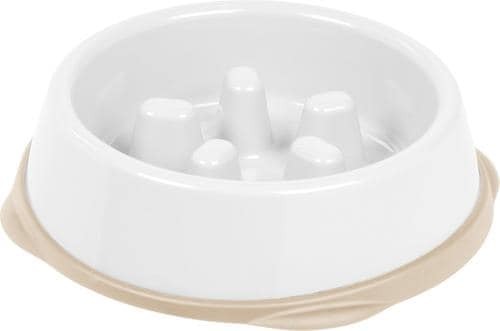
Slow feeders, lick mats, snuffle mats or puzzles: where to start
The best starting point is the job you want the feeder to do. We would choose one manageable activity before buying a cupboard full of increasingly difficult games.
Read the guide ↗ Enrichment · Buying guide
Choose a slow feeder by access, portion and cleaning
We would buy a slow bowl that lets the dog finish a measured portion comfortably. A deeper maze is not automatically a better meal.
Read the guide ↗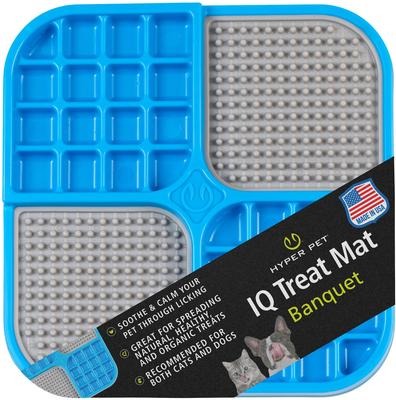 Enrichment · Buying guide
A useful lick mat starts with a workable spread
We would choose a texture that holds a thin layer of the planned food and can be washed thoroughly afterward. A mat is a food activity that needs supervision.
Read the guide ↗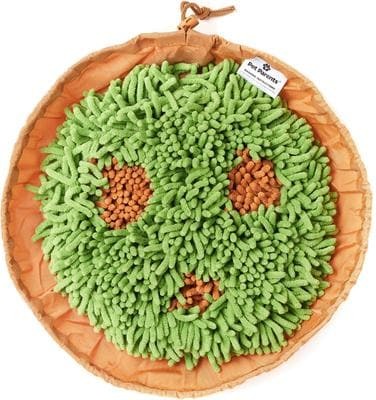 Enrichment · Buying guide
Choose a snuffle mat you can empty and wash
We would begin with reachable dry food and a mat the household can clean and dry reliably. Dense fabric is useful only while the dog is searching rather than dismantling it.
Read the guide ↗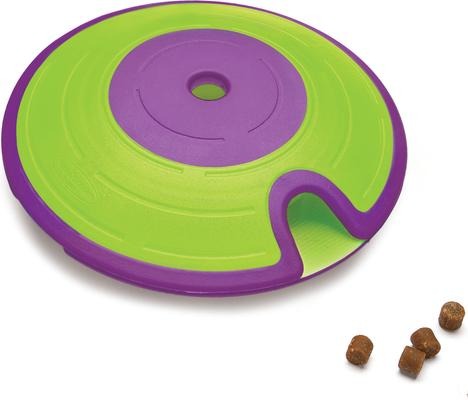 Enrichment · Buying guide
Buy the puzzle action your dog can learn
We would choose a game by the action it asks the dog to perform: lift, slide, spin or tip. Difficulty labels are useful clues, not a ranking of dogs.
Read the guide ↗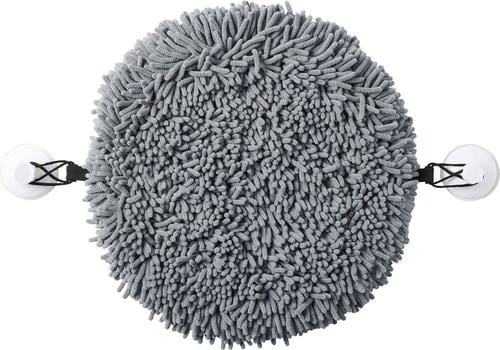 Enrichment · Buying guide
First enrichment feeders for a puppy
Our first puppy feeder would be easy to supervise, simple to empty and appropriate for today's mouth and meal portion. A puppy label alone does not settle those checks.
Read the guide ↗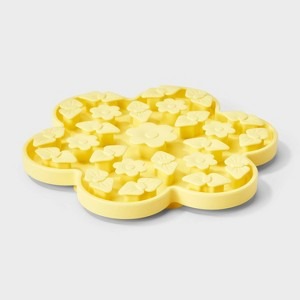 Enrichment · Buying guide
Short muzzles need access before a deeper maze
We would prioritize comfortable access to the food over a feeder's difficulty claims. A shallow surface may be a better starting comparison than tall narrow ridges.
Read the guide ↗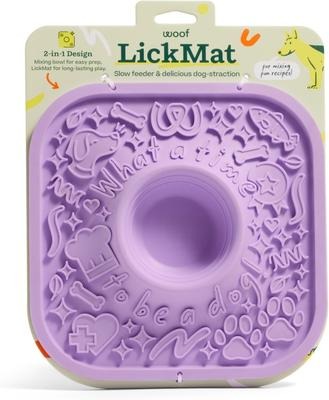 Enrichment · Buying guide
Wet-food enrichment: keep access and washing practical
For wet food, we would compare a washable licking surface or explicitly supported bowl before a fabric hiding game. Cleaning between uses is part of the purchase.
Read the guide ↗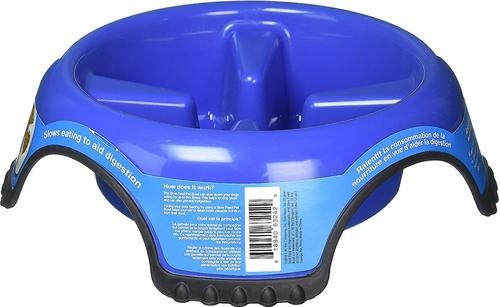 Enrichment · Buying guide
Three ways to make dry kibble more interesting
We would choose between ridges, fabric searching and dispensing based on the dog's behavior and the owner's routine. Measure the food before distributing it.
Read the guide ↗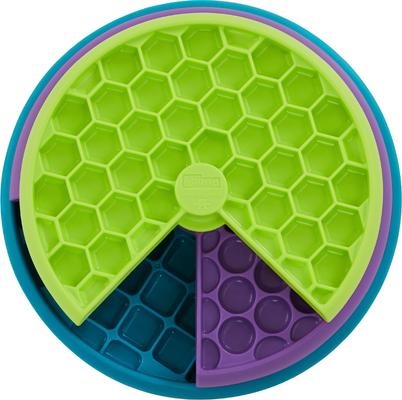 Enrichment · Buying guide
Choose the feeder you can clean after every use
We would put a clear cleaning routine near the top of the buying checklist. Daily use brings food into grooves, seams and fabric folds.
Read the guide ↗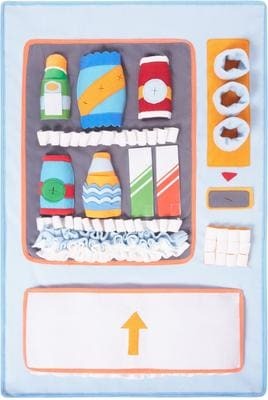 Enrichment · Buying guide
Enrichment feeders for homes with little spare floor space
We would start with the activity footprint and where the empty product will live. A small home can still offer variety through one manageable feeder at a time.
Read the guide ↗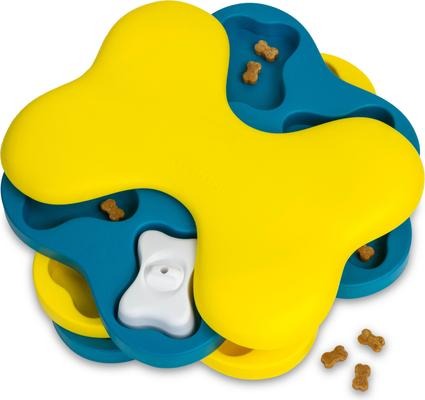 Enrichment · Buying guide
Beginner puzzle sessions should make success easy
Our first puzzle session would reveal the food with one understandable action. We would use the person's demonstration and an easy setup before adding more covers.
Read the guide ↗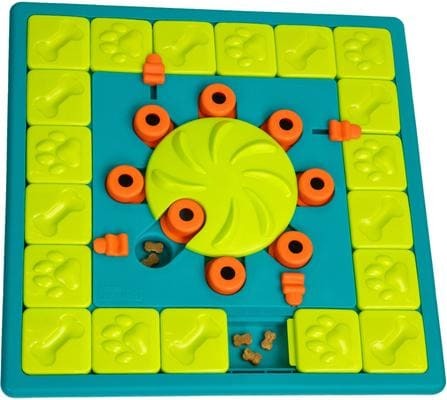 Enrichment · Buying guide
When a more difficult dog puzzle is worth considering
We would add complexity only after the dog uses the existing game comfortably. More sliders and a higher level are useful when they create a learnable next step.
Read the guide ↗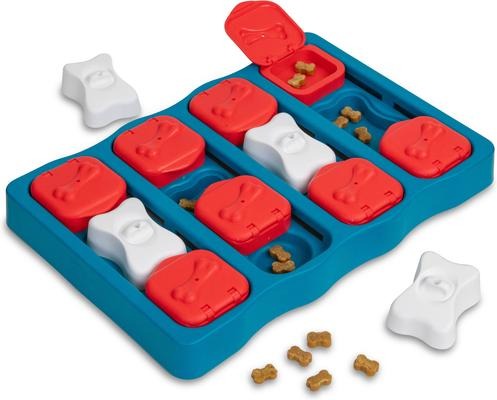 Enrichment · Buying guide
Compare enrichment prices without buying the wrong variant
We would set a budget around the complete usable item. The lowest recorded family price is a research starting point, not proof of the best deal.
Read the guide ↗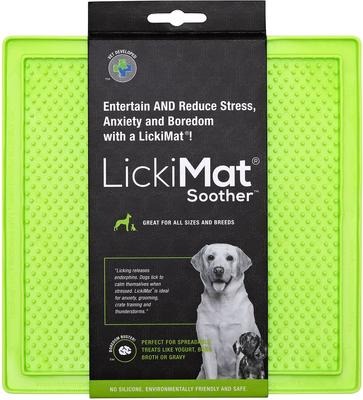 Enrichment · Buying guide
Multiple dogs: plan separate supervised feeding stations
We would choose each feeder around the dog using it and give every dog enough space for a calm supervised activity. Buying identical items is optional.
Read the guide ↗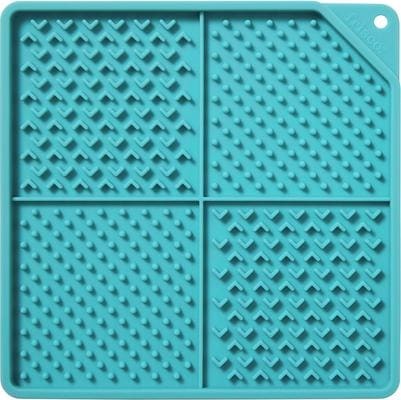 Enrichment · Buying guide
Build an enrichment rotation without overbuying
We would begin with two different activities that are easy to supervise and clean. Variety comes from how food is presented as well as which product is used.
Read the guide ↗Start with your life
A useful answer. Then a plan for you.
A dog setup that belongs in your living room
Start with the space your dog needs, then choose the look you want to live with. A crate that resembles furniture still has to work as a resting space.
Read the guide →Build a dog setup around easier cleaning
The useful question is which part of cleanup you want to make easier: taking out a tray, washing a cover or rinsing a resting surface.
Read the guide →Bring a puppy home with a smaller, clearer shopping list
Prepare a manageable first setup, keep suitable equipment you already own, and leave room to change the plan as you learn about your puppy.
Read the guide →Make a smaller home work for your dog
Separate the space equipment needs while in use from the space it takes when stored. A folding product only saves storage space when it is put away.
Read the guide →