Compare your options
| Type | When to consider it | The tradeoff |
|---|---|---|
| Fillable food toy | A reusable object that can hold part of a suitable meal or treat portion for a supervised activity. | Opening size, material and cleaning access matter. Difficulty can rise quickly with tightly packed fillings; begin with an easy version. |
| Food puzzle | An activity with compartments, sliders or other mechanisms that the dog explores for food. | Removable pieces and delicate moving parts may be unsuitable for destructive chewing. More complex is not automatically more useful. |
| Sniffing activity | A simple search game in an appropriate space can provide variety without a complicated purchase. | The environment still needs supervision. Loose fabric, small containers or improvised materials can be swallowed or torn. |
Match the activity to the dog
Observe whether your dog noses, paws, chews or tries to carry the whole object away. Select size and material from the maker’s guide, considering mouth size and chewing behavior rather than age alone. A dog that destroys bedding or toys needs a more conservative selection and closer assessment of the activity. Our planner excludes multipart puzzles when destructive chewing is reported.
Make the first session easy
Offer an accessible version in a quiet place. For a food toy, use an amount and presentation that lets the dog understand the activity without prolonged frustration. For a puzzle, begin with the simplest configuration supported by the instructions. Stay nearby and remove the item when the session ends rather than assuming successful supervised use establishes safe unattended use.
Keep food choices appropriate
Use food already suitable for your dog and account for it within the daily feeding routine. Check ingredient compatibility and avoid introducing several new foods at once. If your dog has dietary restrictions, ask the professional managing that diet before trying recipes or rich fillings. The equipment guide does not prescribe a nutrition plan.
Plan cleaning before buying
Inspect seams, cavities and narrow openings. Check whether the product can be dismantled and which parts can be washed by which method. Clean after food use and allow it to dry as directed. A toy that traps residue or is too awkward to clean may be a poor match for your household even when the activity itself is appealing.
Rotate and inspect
Keep a small selection you can inspect and maintain. Before each session, look for damage, missing pieces, sharp edges and changes in the material. Retire damaged items according to the maker’s guidance. Keep a note of which activities the dog chooses and can use comfortably; that is more useful than buying a progressively harder puzzle every time.
Before you buy
- Size and material checked against the maker’s guide
- Chewing and swallowing behavior considered
- First activity is easy enough to understand
- Food is appropriate for the dog’s existing diet
- Every food-contact surface can be cleaned
- Damaged parts and loose pieces checked before use
Common questions
Can a food toy treat separation distress?
It may be one activity in a broader plan, but it is not a treatment by itself. Distress when alone needs individualized support.
Should I buy the hardest puzzle?
Start with a manageable activity. Difficulty is useful only when the dog can participate comfortably and the construction is suitable.
Is any toy indestructible?
No. Material claims do not replace supervision, inspection and removal of damaged equipment.
Products to compare
- IRIS Slow Feeder Short Snouted
- Vibrant Life 3.2-Cup Silicone Slow Pet Feeder
- Frisco Square Silicone Dog Lick Mat
- Hyper Pet IQ Banquet Lick Mat
- JW Pet Skid Stop Slow Feeder
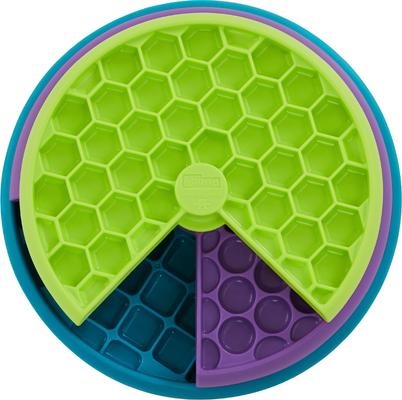
- LickiMat Classic Soother
Keep reading
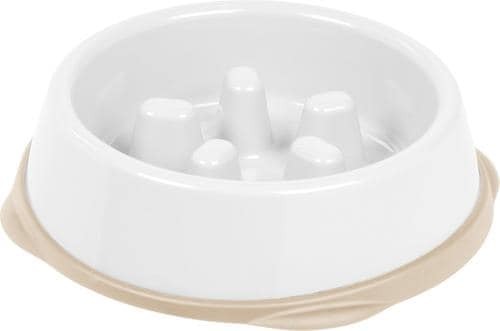 Slow feeders, lick mats, snuffle mats or puzzles: where to start →
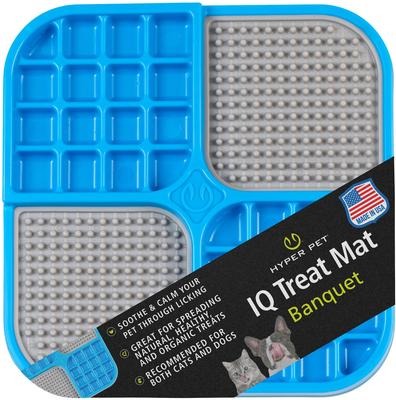 A useful lick mat starts with a workable spread →
 Choose the feeder you can clean after every use →
Fit and care references
Check the instructions for the exact model you choose. Reference pages reviewed October 26, 2026.
Find what fits your situation ↗