Compare your options
| Type | When to consider it | The tradeoff |
|---|---|---|
| Flat collar and standard leash | A straightforward setup when the collar fits securely and the dog can be managed comfortably with it. | Check buckle, adjustment and attachment strength. Slipping out, heavy pressure or difficult handling calls for a closer assessment. |
| Body harness | Offers different leash attachment positions and distributes contact across a different part of the body. | Chest shape and adjustment matter. A harness can rub, rotate or be backed out of if poorly fitted; weight alone is not a reliable size selection. |
| Long line | Useful for supervised distance and recall practice in a suitable open space. | More line means more to manage. Avoid tangles and uncontrolled acceleration; busy sidewalks are a poor setting for learning to handle one. |
Measure for the specific design
Use the maker’s instructions for the exact collar or harness. Record chest girth where instructed, and any neck or other measurements required by that model. A size name such as medium does not transfer reliably between products. Check how much adjustment remains in both directions rather than buying a size that is already at its limit.
Check fit while moving
Watch a short, ordinary walk. Look for shifting straps, rubbing behind the front legs, restricted movement and hardware touching sensitive areas. Confirm that the intended leash attachment is clear and that you can clip and unclip it reliably. If the dog backs up or twists, assess whether the equipment stays in place; do not test escape resistance next to traffic.
Choose a leash you can handle
Consider the grip, length, clip, weight and cleaning needs together. A heavy clip may be awkward for a very small dog, while a thin line can be uncomfortable to hold under tension. Plan what you will do at a doorway, when picking up waste and when another dog approaches. Handling practice in a quiet area is part of evaluating the setup.
Keep the learning plan simple
Start practice where there is room to turn and distractions are manageable. Reward moments of slack leash and attention. Build toward harder routes gradually. If pulling or lunging exceeds what you can comfortably manage, ask a trainer to assess fit and handling with you rather than relying on a generic product ranking.
Use specialized equipment with a clear purpose
Head collars, limited-slip collars and other training tools have different fit and handling requirements. Ask why a tool is being proposed, how it will be introduced and what signs mean the plan should change. This guide does not prescribe a tool from a behavior label. Vehicle restraint and running/towing setups also need their own intended-use checks.
Before you buy
- Exact model’s measuring instructions followed
- Adjustment checked in motion, not just standing
- Attachment points and clip operation understood
- No rubbing, slipping or restricted movement observed
- Leash length suits the route and handler
- Training support arranged where control is difficult
Common questions
Does a front attachment stop pulling?
It can change handling, but it does not replace teaching. Fit, movement and the individual dog still need checking.
Can I pick a harness by weight?
Use the product’s measurement guide. Dogs of similar weight can have different chest and neck proportions.
Why is walking equipment absent from planner results?
The current planner covers home equipment. Walking equipment needs additional fit and handling inputs before named products can be ranked responsibly.
Products to compare
Use the fit and buying checklist above while we finish verifying named products for this category. We do not yet have a product shortlist to recommend here.
Keep reading
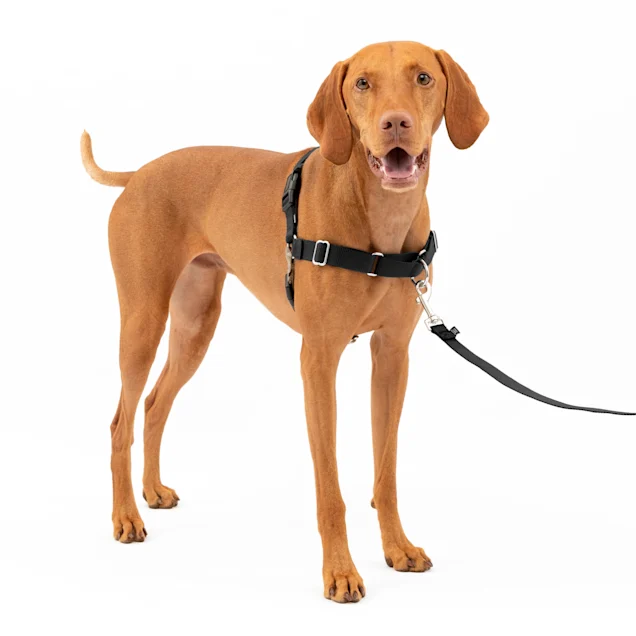 Buying a harness for a dog that pulls: control without a miracle claim →
 The best puppy harness starts with today's measurements →
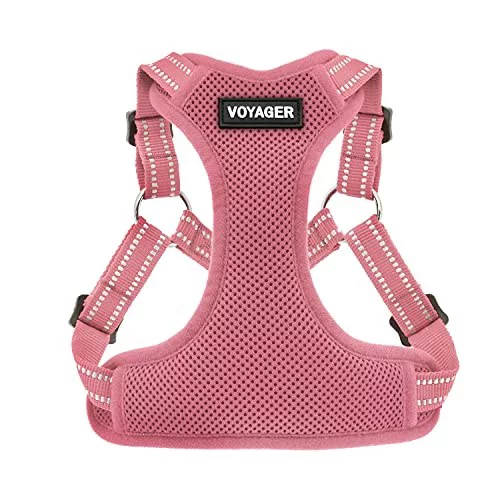 When a dog backs out: buy for a verified fit, not an escape-proof promise →
Fit and care references
Check the instructions for the exact model you choose. Reference pages reviewed October 26, 2026.
Find what fits your situation ↗