Measure before choosing
Inside space answers “can my dog use it?” Outside space answers “can I put it here?” Both need checking.
- Measure nose to tail base, widest body point, and natural standing and sitting height in inches.
- Keep usable inside L × W × H separate from complete outside L × W × H; never substitute one for the other.
- Record bedding thickness and leave door, ventilation and walking access clear.
- Record what happens before, during and after a brief, manageable period apart.
- Separate observations about being alone from observations about being inside a kennel.
Set up, inspect and clean
Pause a setup that produces distress or attempts to force a way out. A larger enclosure, covered sides or a stronger latch should not be treated as a treatment plan. Keep notes that an individual assessment can use.
Questions for this setup
Will a stronger kennel solve distress?
Construction does not explain why the dog is distressed. Do not keep increasing containment strength as a substitute for an individual plan.
Why might the planner show no kennel?
Reported distress or escape attempts stop named kennel recommendations. The tool should not force a purchase when the central question is whether confinement is appropriate.
What should I record?
Note the setting, time apart, what you observed and how the dog settled afterward. Describe actions rather than assigning a diagnosis.
The right answer may be a different confinement plan
The first purchasing question is whether your dog already rests comfortably in a crate. Calm voluntary use is different from repeated attempts to force the door or chew the frame. If confinement produces panic, discuss the setup with your veterinarian before buying a more restrictive enclosure.
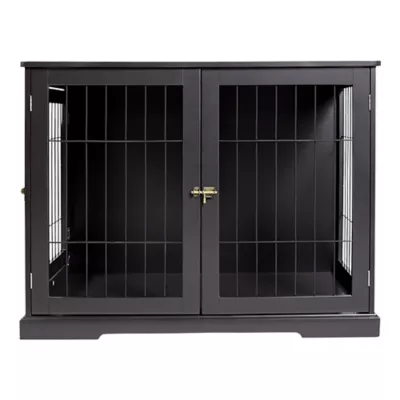
For a dog that is comfortable in a crate, compare visibility, access and the position of the crate within the home. An open wire design lets you observe the dog readily. A second door can make an existing calm location easier to use. Those are convenience features, not evidence that the crate reduces separation distress.
Do not let labels such as high anxiety, escape proof or indestructible replace an assessment of your dog’s response. Our heavy-duty catalog entries preserve the sellers’ wording for identification, but those phrases do not demonstrate a treatment benefit. Spend on a crate only when it supports a suitable plan; sometimes management, professional help or an alternative space should come first.
Our take
We would decide whether confinement belongs in the dog’s care plan before shopping for a crate. None of the products in this catalog earns an anxiety-treatment recommendation from a strength label or a higher price.
What to compare
- Whether the dog tolerates confinement calmly
- Evidence of panic or escape-related injury
- A veterinarian-informed behavior plan
- Visibility and access if crating is appropriate
Models discussed in this guide
Research comparisons, not hands-on test results or confirmation that a model fits your dog.
Source prices are shown from lower to higher within each model. Different sizes and configurations are not an exact-SKU savings comparison. Shipping, tax and checkout availability are excluded.
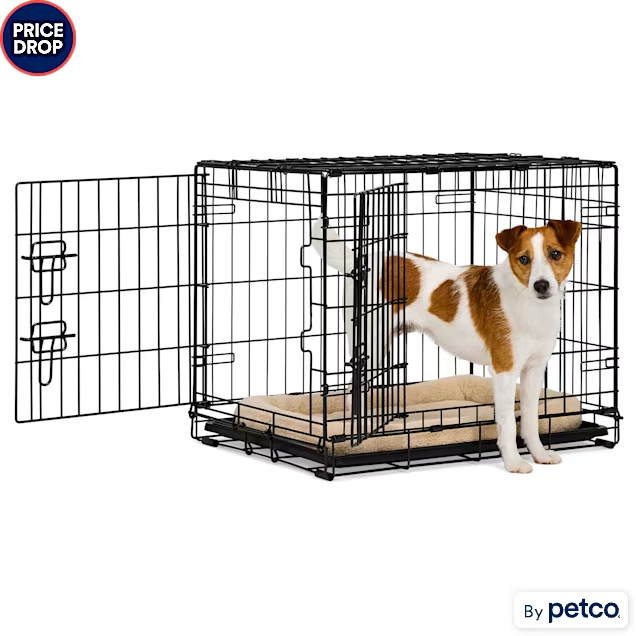
EveryYay Two Door Wire Crate
We would compare the EveryYay two-door wire model for a room where a side entrance keeps the dog’s route clear. It belongs beside the other ordinary double-door crates in the same size.
What could make us pass: Measure both door swings and the cleaning route. The second opening earns its place only if your furniture arrangement leaves it accessible.
| Retailer | Observed price | Variant | Product page |
|---|---|---|---|
| Petco | $42.99 · 2026-10-25 | 24 x 17.5 x 19.5 in (listed dimensions); black | View product at Petco |
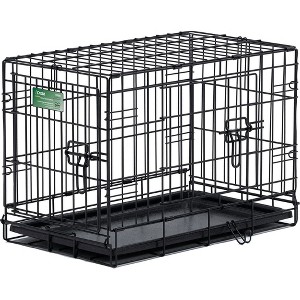
MidWest iCrate Double Door
We would put the double-door iCrate near the beginning of a puppy-crate comparison. Its clearest advantage over the single-door version is flexibility when you move the crate or rearrange the room.
What could make us pass: Compare the exact size and included divider. We would choose the single-door version if one accessible entrance already does everything your setup needs.
| Retailer | Observed price | Variant | Product page |
|---|---|---|---|
| Chewy | $54.99 · 2026-10-25 | 30 in; Color not confirmed | View product at Chewy |
| Petco | $100.99 · 2026-10-25 | 42 x 28 x 30 in (listed dimensions); Color not confirmed | View product at Petco |
| Target | $101.37 · 2026-10-25 | 30 in; Color not confirmed | View product at Target |
| Target | $133.00 · 2026-10-25 | 36 in; Color not confirmed | View product at Target |
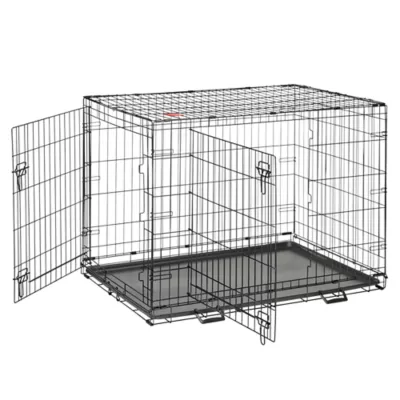
Top Paw Double Door Wire Crate
We would start here when a puppy crate has to work in more than one room. The extra door gives you another way to place it beside furniture without blocking the entrance.
What could make us pass: Choose the size and door position first. A second door is worth paying for only if your layout will use it; the single-door Top Paw is the comparison to make.
| Retailer | Observed price | Variant | Product page |
|---|---|---|---|
| PetSmart | $64.88 · 2026-10-25 | 42 in; Color not confirmed | View product at PetSmart |
Keep reading
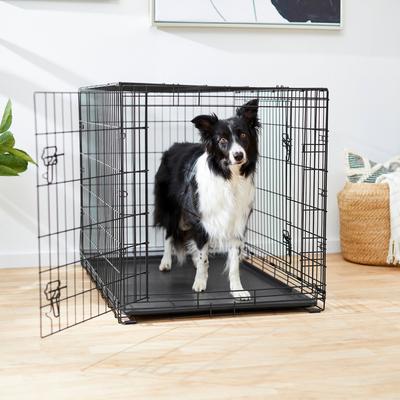
Sources and next steps
Research snapshot: 2026-10-25. Confirm current specifications, travel requirements and prices with the source before purchase.