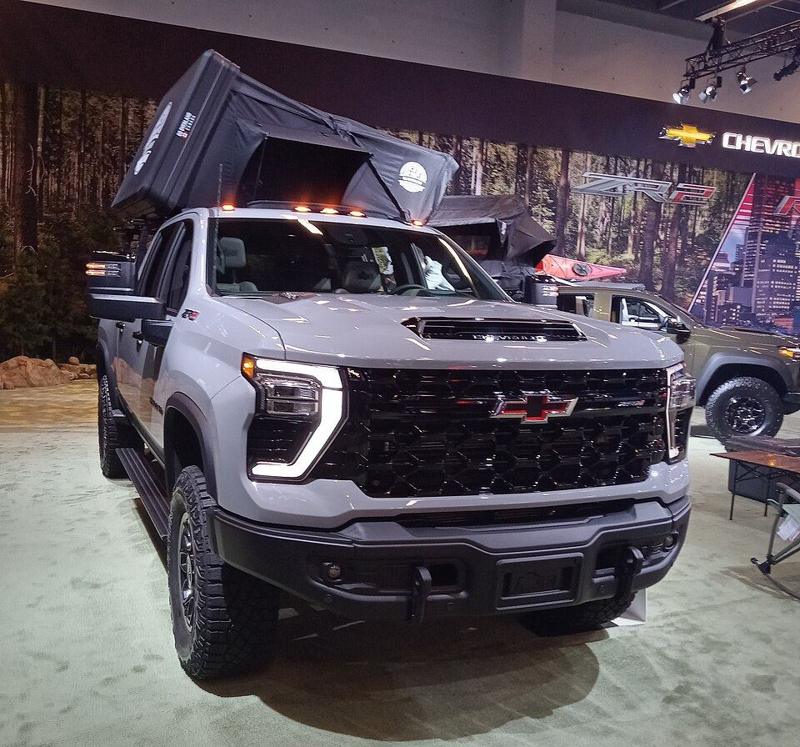
Research-based shortlist, not a verified-fit list. Confirm your model year, body style, trim and seat layout before buying.
This guide builds on our general guide to choosing the best kennel for your vehicle. Start there for the overall approach, or change vehicles with the selector below.
Start with your Chevrolet Silverado’s layout
A Silverado 1500, an HD truck and a Silverado EV should not share a fit result. Cab style and rear-door access decide whether an in-cabin kennel is practical. Measure the path into the cabin before comparing the space where the crate will finally sit.
Trace the entire turn into the rear cabin. A box can match the floor width yet stop against the front seat while you rotate it through the doorway. Include the kennel handle and latch in that trial, and return the front passenger seat to its normal position before calling the arrangement workable.
Owners who alternate between work equipment and rear passengers should decide where the empty kennel lives when it is removed. The 1500, HD and EV notes below help separate the starting layouts; they do not establish that a common Chevrolet badge makes a restraint installation transferable.
Choose your configuration
Cab layout and model year matter. The following are separate starting points, not interchangeable fit approvals. The representative photo above does not show every configuration.
Silverado 1500
Begin with the Silverado 1500’s model year and cab style. A new-generation brochure, an older Double Cab and a Crew Cab owner’s photograph should not be treated as equivalent fit evidence. Preserve the driver’s preferred seat position and the passengers who normally travel with the dog. Then compare the full kennel envelope with both the doorway and its intended resting place. Check whether the widest point is a handle, hinge or latch instead of the shell itself. If a rear cushion must move, follow the year-specific manual and account for the storage or floor covering underneath. Make a loading trial before ordering, including the motion needed to rotate the kennel into position. The article’s product shortlist identifies candidates to investigate; it does not certify a Silverado 1500 installation.
Silverado 2500 HD
Keep the Silverado 2500 HD separate from the 1500 when measuring. Similar styling and shared trim names do not prove that a kennel’s loading path or securing arrangement carries across. Establish the exact cab and year, then mark which seats must remain available for passengers. The practical limitation may be the approach through the rear door rather than the amount of space visible after a seat is folded. Include the step or lift needed to handle an empty kennel, especially if it will be removed regularly. Test access to the kennel latch with the front seats occupied and the truck doors closed. Before choosing a candidate, ask its maker how the proposed position should be restrained; a convenient tie point or seat fitting is not automatically a suitable installation point.
Silverado 3500 HD
For the Silverado 3500 HD, separate the passenger-cabin assessment from the truck’s bed and towing job. A truck used with a trailer may carry extra people and gear, and that everyday load should be present in your planning sketch. Start with the precise cab and model year, not the payload badge. Decide whether the dog’s correctly sized kennel leaves the passenger belts and ordinary entry routes usable. Measure around storage boxes and accessories that will remain fitted rather than promising yourself they will always be removed. Work through one complete stop: park, open the vehicle, reach the kennel latch and bring the dog out under control. If that requires unloading unsecured work equipment first, revise the layout. Confirm restraint and kennel instructions independently before considering the fit exercise complete.
Silverado EV
Treat the Silverado EV as its own vehicle, not as a gas Silverado with a different power source. Start with the passenger compartment in its normal driving configuration and record the exact year and trim. Any cargo-expansion feature should be evaluated under the vehicle manual; an opening that extends usable cargo length is not evidence that it is a suitable occupied dog space. Keep the kennel plan within a documented installation arrangement and do not use the front storage compartment for a dog. Check the rear passenger doorway, the base supporting the kennel and access to ventilation and restraints. Include the exterior handle and door swing when testing a candidate. If a dog-appropriate kennel cannot coexist with the needed passengers, use a different transport plan rather than assuming the truck’s storage volume solves the problem.
The checks that matter here
- 1500, HD or EV and exact cab
- Door aperture versus widest kennel point
- Rear-cabin floor and seat geometry
Kennels we would compare for the Chevrolet Silverado
Start with a restrained in-cabin kennel that leaves passengers and driving controls unobstructed. Compare RuffLand for layout choices and a correctly sized Gunner G1 for a documented crash-tested configuration when installation permits.
RuffLand single-door kennel
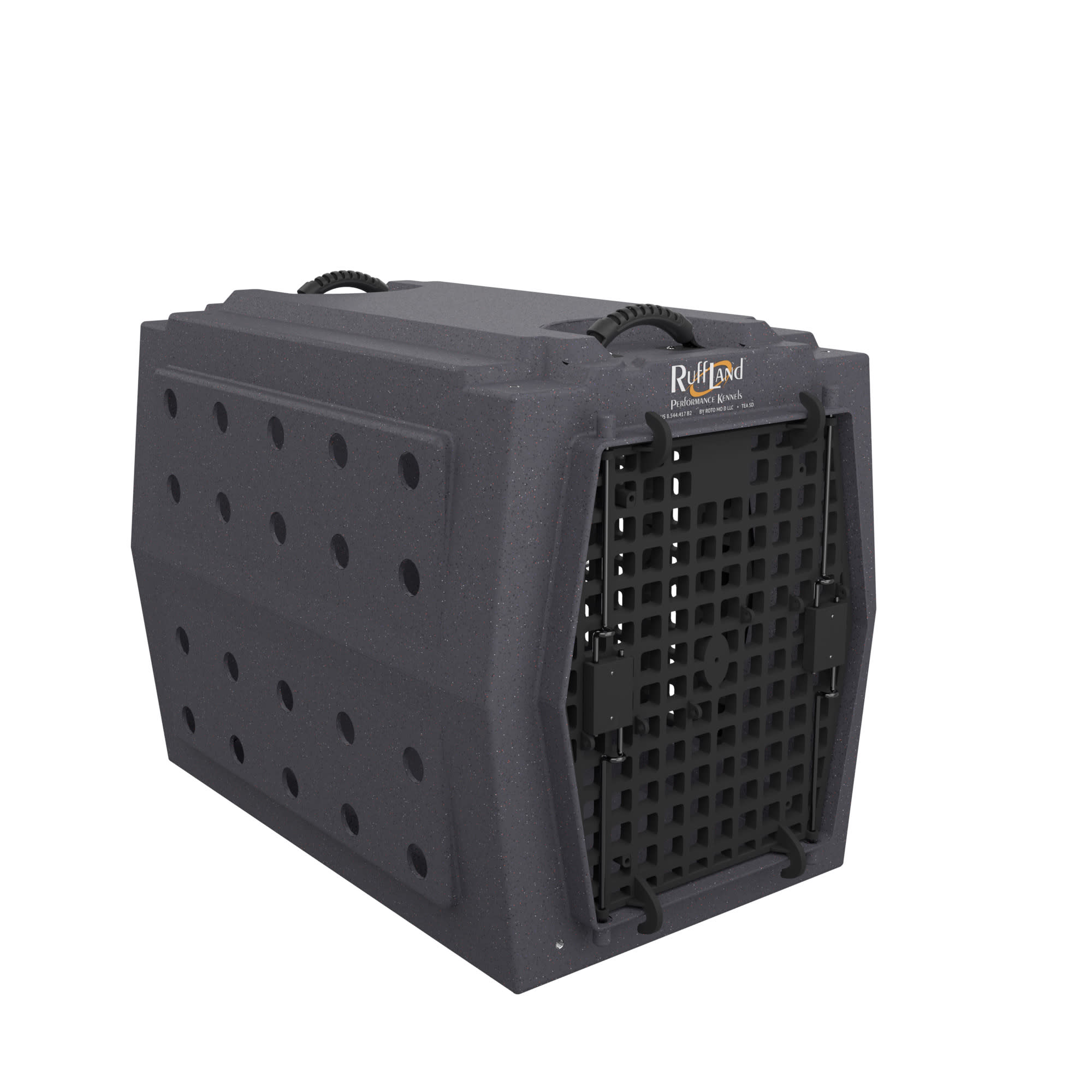
A compact dog-appropriate shell is worth investigating only after its complete loading turn clears your specific 1500, HD or EV rear doorway.
When we would pass: Reject this layout if 1500, hd or ev and exact cab cannot accommodate the dog-appropriate shell and a usable entrance.
Check this option and its instructions →
Gunner G1
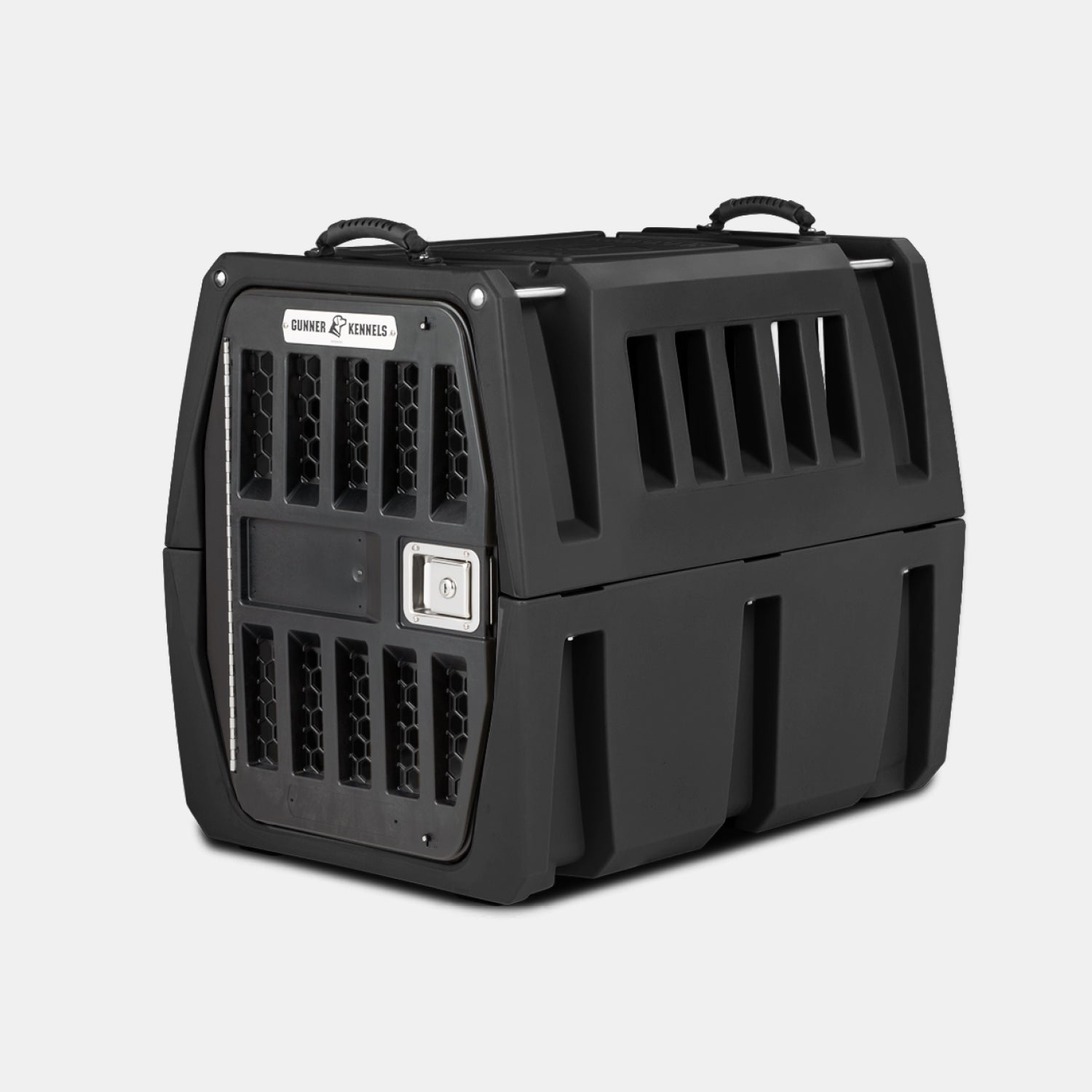
Investigate G1 after the loading rotation is proven; its complete shell must turn past the front seat as well as fit the rear cabin.
When we would pass: The deciding trial includes rear-cabin floor and seat geometry. A floor-only fit does not resolve that constraint.
Check this option and its instructions →
These are candidates to investigate, not confirmed fits. Match the exact size and installation instructions to your dog and vehicle before ordering.
Before you order
Use the main guide’s dog-sizing and loading-route checklist to test your chosen layout. Review how to check crash-test evidence for the exact product and installation; a successful physical fit does not establish crash protection.
Bring your dog’s measurements, your model year and trim, and photos of the intended installation area to the kennel seller. Ask for the exterior envelope and usable interior measurements of the exact size and door configuration. Confirm the return terms before a trial fit.
Sources and related guides
- Chevrolet Silverado manufacturer information
- Compare our kennel product reviews
- All 106 vehicle guides
Reviewed October 26, 2026. Recommendations are editorial judgments from published information; no vehicle-specific fit or crash result is implied.